
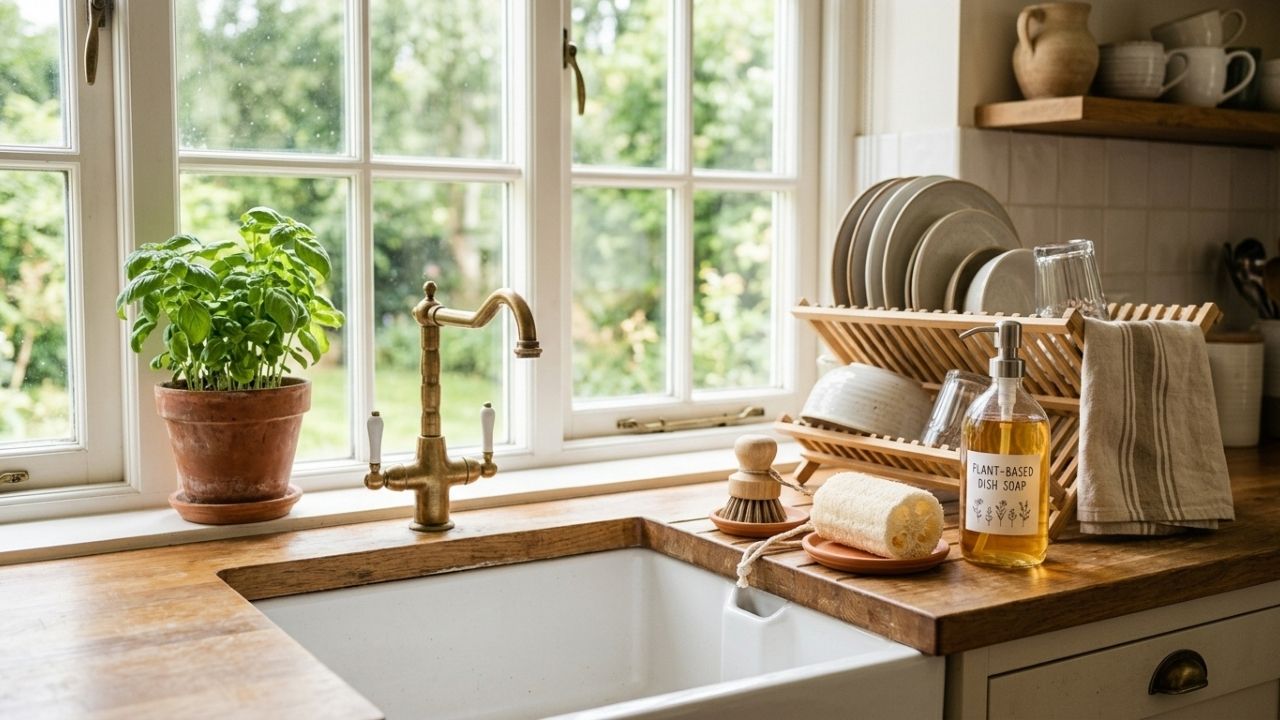
Washing dishes is one of those daily chores that most people do without giving it much thought. Yet this simple habit can quietly use a surprising amount of water, energy, and chemicals over the course of a year. For anyone trying to live a greener lifestyle, the kitchen sink is actually a great place to start making small changes that add up to a real difference.
The good news is that making dishwashing more eco-friendly does not require expensive gadgets or a complete lifestyle overhaul. It simply means being a little more intentional about the water used, the products chosen, and the habits formed at the sink.
This article walks through practical, easy to apply ways to reduce the environmental footprint of dishwashing, whether by hand or by machine.
Why Dishwashing Habits Matter for the Environment
Every time dishes get washed, three resources are typically involved: water, energy, and cleaning products. Each of these carries an environmental cost.
Water is a limited resource in many parts of the world, and leaving the tap running while scrubbing pots and pans can waste gallons in just a few minutes. Energy is used to heat that water, and if it comes from a power grid reliant on fossil fuels, that translates into carbon emissions. Finally, many conventional dish soaps contain synthetic fragrances, dyes, and chemicals that are not always biodegradable, meaning they can linger in waterways after going down the drain.
None of this means dishwashing is inherently bad for the planet. It simply means there is room to make it better, and small adjustments in the kitchen can ripple outward into meaningful conservation over time.
Hand Washing vs Dishwasher: Which Is Greener?
This is one of the most common questions people ask when trying to green their kitchen routine, and the answer depends on habits more than the method itself.
When a Dishwasher Wins
Modern, energy-efficient dishwashers are often more water-conscious than hand washing, especially when compared to washing dishes under a continuously running tap. A full dishwasher load run on an efficient cycle can use significantly less water than washing the same number of dishes by hand with the water left on.
When Hand Washing Wins
Hand washing can be the more eco-friendly option when done thoughtfully, such as filling a basin instead of letting water run continuously. It also avoids the electricity use of a dishwasher altogether, which matters most in homes without an energy-efficient model.
The real takeaway is that the greenest option is the one done with intention. A dishwasher run with an eco setting and a full load beats wasteful hand washing, while mindful hand washing with a basin can beat running a half-empty dishwasher.
Simple Ways to Make Hand Washing More Sustainable
For those who prefer washing dishes by hand, small habit shifts can significantly cut down on water and product waste.
- Fill a basin or plug the sink instead of letting the tap run continuously while scrubbing
- Scrape food scraps into a compost bin or trash before washing to reduce the amount of soap and water needed
- Wash dishes in batches, starting with the least greasy items and moving to the dirtiest, so the water stays usable longer
- Use a reusable dish brush or natural fiber sponge instead of synthetic sponges that shed microplastics
- Turn off the tap while soaping up dishes and only turn it back on to rinse
- Air dry dishes on a rack instead of using paper towels
These changes cost nothing and can be adopted immediately, making them an easy entry point into a more sustainable kitchen routine.
Making Dishwasher Use More Eco-Friendly
For households that rely on a dishwasher, there are still plenty of ways to lower its environmental impact.
Run Full Loads Only
Waiting until the dishwasher is completely full before running it maximizes water and energy efficiency per dish washed. Running half-empty loads wastes resources without much benefit.
Skip the Pre-Rinse
Most modern dishwashers are designed to handle food residue without a full pre-rinse under the tap. Simply scraping off large food particles is usually enough, saving a considerable amount of water that would otherwise go down the drain before the dishwasher even starts.
Use the Eco Setting
Many dishwashers come with an eco or energy-saving mode that uses lower water temperatures and longer wash cycles to achieve the same cleanliness with less energy. Choosing this setting whenever possible is one of the simplest ways to reduce environmental impact.
Skip Heated Drying
Turning off the heated dry function and letting dishes air dry inside the machine after the cycle ends can meaningfully cut electricity use.
Maintain the Machine
A dishwasher that is regularly cleaned and free of clogs in the filter or spray arms runs more efficiently, using less water and energy to get dishes clean on the first try.
Choosing Eco-Friendly Dish Soap
The cleaning product used at the sink matters just as much as the method. Conventional dish soaps can contain phosphates, synthetic fragrances, and petroleum-based ingredients that are not always kind to waterways once rinsed away.
When shopping for a greener dish soap, it helps to look for the following qualities:
- Biodegradable formulas that break down naturally without harming aquatic life
- Plant-based or naturally derived ingredients instead of petroleum-based surfactants
- Free from synthetic dyes, phosphates, and artificial fragrances
- Concentrated formulas that require less product per wash and reduce packaging waste
- Packaging that is refillable, recyclable, or made from recycled materials
Some households also choose to make their own dish soap using simple ingredients like castile soap, water, and a splash of vinegar or citrus. This can be a fun and cost-effective way to cut down on packaging waste entirely while controlling exactly what goes down the drain.
Comparing Common Dishwashing Tools
Choosing the right tools can also reduce environmental impact over time, particularly when it comes to avoiding single-use or plastic-heavy products.
| Tool | Eco-Friendliness | Notes |
|---|---|---|
| Plastic sponge | Low | Sheds microplastics, not biodegradable, needs frequent replacing |
| Natural loofah sponge | High | Compostable, plant-based, gentle on cookware |
| Wooden dish brush | High | Durable, replaceable heads reduce waste, biodegradable handle |
| Silicone scrubber | Moderate | Long lasting and reusable, though not biodegradable |
| Cotton dish cloth | High | Washable and reusable hundreds of times, reduces sponge waste |
| Steel wool pad | Moderate | Recyclable as scrap metal, but not compostable |
Switching to natural fiber or reusable tools reduces the constant cycle of buying and throwing away plastic sponges, which can take centuries to break down in landfills.
Water-Saving Tricks Worth Trying
Beyond the basics, there are a few lesser-known tricks that can help conserve water during dishwashing.
- Collect the cold water that runs while waiting for it to heat up and use it to water plants
- Use a dish tub inside the sink so leftover soapy water can be reused for a quick pre-wash of the next batch
- Install a low-flow aerator on the kitchen faucet to reduce water usage without sacrificing pressure
- Wash delicate items like glassware together in one round rather than spreading them across multiple washing sessions
Even small water-saving habits like these can add up to hundreds of gallons saved per year in an average household.
Reducing Waste Beyond the Sink
Making dishwashing greener is not just about the wash itself. It also involves thinking about what happens before and after.
Choosing dishware and cookware made from durable materials like stainless steel, glass, or cast iron means fewer replacements over time, which reduces manufacturing waste. Avoiding non-stick pans coated with harsh chemicals also means gentler cleaning is possible, often requiring less scrubbing and fewer harsh products.
On the drying side, swapping paper towels for reusable cloth towels cuts down on daily waste. A stack of cotton towels can be washed and reused indefinitely, unlike paper towels that go straight into the trash after a single use.
Building a Sustainable Dishwashing Routine
Creating lasting change often comes down to consistency rather than perfection. A few starting points for building a greener dishwashing routine include:
- Choosing one or two habits to start with, such as turning off the tap while scrubbing or switching to a biodegradable soap
- Keeping reusable tools like cloth towels and natural sponges stocked near the sink so they are easy to reach for
- Running the dishwasher only with full loads and using the eco setting as a default
- Composting food scraps before washing instead of rinsing them down the drain
- Periodically checking for leaks or inefficiencies in faucets and dishwashers
Over time, these small shifts become second nature, turning a daily chore into an easy opportunity to support a more sustainable lifestyle.
Final Thoughts
Making dishwashing more eco-friendly does not require a dramatic change in routine. It is about paying attention to water use, choosing gentler products, and picking reusable tools over disposable ones.
Whether washing by hand or relying on a dishwasher, small and consistent choices at the sink can meaningfully reduce water waste, energy consumption, and chemical runoff. For anyone working toward a greener home, the kitchen sink is a simple and rewarding place to begin.



