
Electronic waste, often called e-waste, has quietly become one of the fastest growing waste streams in the world. Old phones, broken chargers, outdated laptops, and forgotten cables pile up in drawers and eventually end up in landfills, where they release harmful chemicals into the soil and water.
For anyone trying to live a more sustainable and eco-friendly life, tackling e-waste at home is one of the most practical and rewarding places to start. It does not require a complete lifestyle overhaul, just a few intentional habits and a willingness to think differently about the gadgets that surround daily life.
This article explores what electronic waste really is, why it matters, and how simple changes at home can make a meaningful difference for the planet.
What Counts as Electronic Waste
Electronic waste includes any device that runs on electricity or batteries and has reached the end of its usable life. Many people only think of computers or phones, but the category is much broader than that.
Common Household E-Waste Items
- Smartphones, tablets, and old flip phones
- Laptops, desktop computers, and monitors
- Printers, scanners, and ink cartridges
- Televisions and streaming devices
- Kitchen appliances like blenders, microwaves, and coffee makers
- Chargers, cables, and power adapters
- Batteries, including rechargeable and single use types
- Smart home gadgets, routers, and gaming consoles
Because so many everyday items fall into this category, most households generate more e-waste than they realize. A drawer full of old phone chargers or a closet with a broken printer counts just as much as a discarded computer tower.
Why Reducing E-Waste Matters
Electronics are made from a mix of valuable and hazardous materials, including gold, copper, lithium, lead, and mercury. When these devices are thrown into regular trash, the hazardous components can leach into soil and groundwater, while the valuable materials are lost forever instead of being recovered and reused.
Manufacturing new electronics also requires significant energy, water, and raw materials. Every time a device is repaired or reused instead of replaced, it reduces the environmental footprint tied to mining and manufacturing. In short, cutting down on e-waste is not just about cleaner landfills, it is about conserving resources and lowering the overall demand for new production.
There is also a human cost to consider. In many parts of the world, informal e-waste recycling exposes workers, including children, to toxic fumes and materials. Reducing the volume of e-waste generated at home indirectly reduces the pressure on these informal recycling systems.
Practical Ways to Reduce E-Waste at Home
Reducing electronic waste does not mean giving up technology. It means being more thoughtful about how devices are bought, used, maintained, and eventually retired.
Buy Only What Is Needed
Before purchasing a new gadget, it helps to ask whether the current device truly needs replacing or whether it can be repaired, upgraded, or simply used a little longer. Marketing often pushes the idea that newer is always better, but many devices remain perfectly functional for years beyond their perceived expiration date.
- Research whether a battery replacement or software update can extend a device’s life
- Avoid impulse purchases driven by limited time sales or trends
- Consider whether a shared or multi purpose device could replace several single use gadgets
Choose Quality Over Quantity
Cheaper electronics often have shorter lifespans and are harder to repair, which means they end up as waste much sooner. Investing in well built, reputable products, even if they cost a little more upfront, tends to reduce the frequency of replacement.
- Look for devices with good repairability scores
- Read reviews that mention long term durability, not just initial performance
- Prioritize brands known for offering spare parts and repair support
Repair Instead of Replace
Many households throw away electronics the moment something stops working, without exploring whether a simple fix is possible. Local repair shops, online tutorials, and community repair events can breathe new life into devices that seem beyond saving.
- Search for repair guides before assuming a device is unfixable
- Visit local repair cafes, which are community events where volunteers help fix broken items
- Keep basic tools on hand for simple fixes like replacing a battery or a cracked screen protector
Donate or Sell Working Devices
If a device still works but is no longer needed, donating or selling it keeps it in use rather than sending it to a landfill. Schools, community centers, and charities often accept working electronics, and online marketplaces make it easy to find a new owner.
- Wipe personal data before donating or selling any device
- Check with local schools, shelters, or nonprofits about electronics donation programs
- Consider trade in programs offered by retailers or manufacturers
Recycle Responsibly
When a device truly reaches the end of its life, proper recycling ensures that valuable materials are recovered and hazardous components are handled safely.
- Look for certified e-waste recycling centers in the local area
- Many electronics retailers offer drop off bins for old devices and batteries
- Some manufacturers run take back programs for their own products
Store and Maintain Devices Properly
Simple maintenance habits can extend the life of electronics significantly, reducing how often they need to be replaced.
- Keep devices away from extreme heat or moisture
- Use protective cases and screen covers to prevent physical damage
- Avoid overcharging batteries by unplugging devices once fully charged
- Regularly update software to keep devices running efficiently
Comparing Disposal Options
Understanding the difference between common disposal choices can help households make better decisions when a device is no longer wanted.
| Disposal Method | Environmental Impact | Best For |
|---|---|---|
| Throwing in regular trash | High impact, releases toxins into landfills | Should be avoided entirely |
| Certified e-waste recycling | Low impact, recovers valuable materials safely | Devices that are broken beyond repair |
| Donating working devices | Very low impact, extends product life | Devices that still function well |
| Selling on resale platforms | Very low impact, extends product life and adds value | Devices in good working condition |
| Manufacturer take back programs | Low impact, often includes proper recycling | Devices tied to a specific brand program |
| Repair and continued use | Minimal impact, avoids new production | Devices with fixable issues |
Rethinking Everyday Habits
Beyond the big decisions like buying, repairing, and recycling, small everyday habits also play a role in reducing e-waste over time.
Manage Cables and Accessories
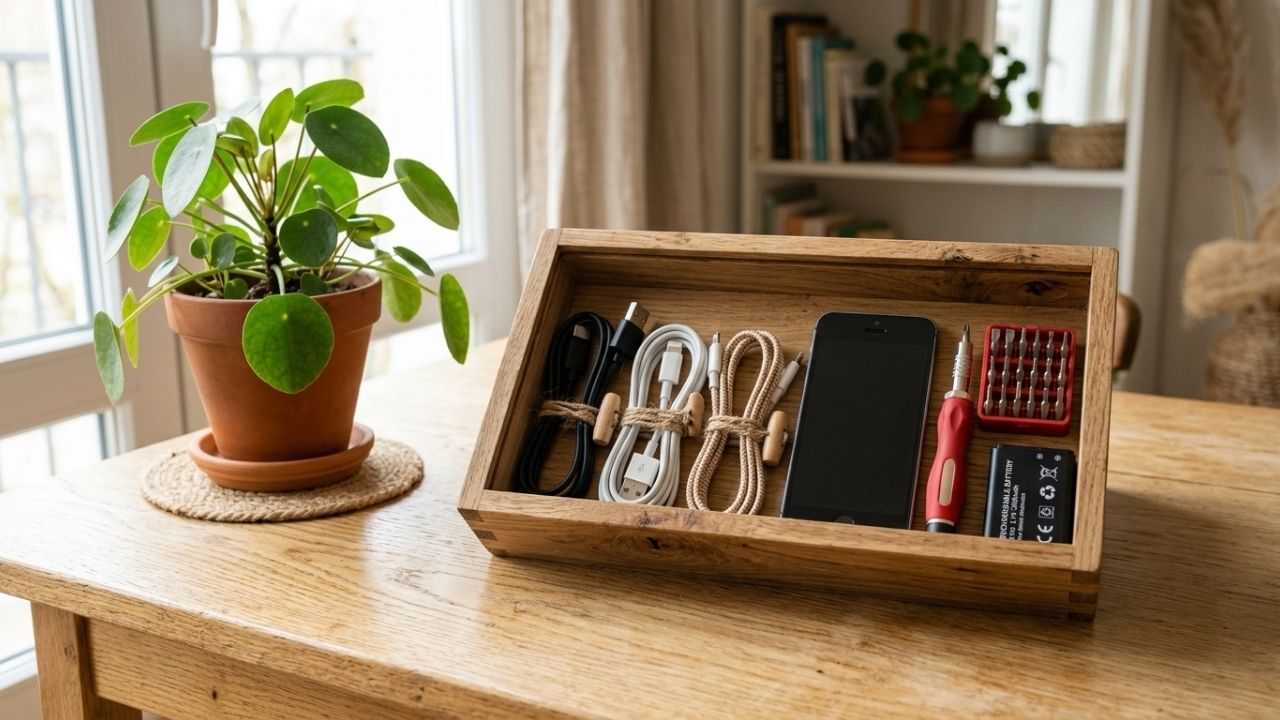
Cables and chargers are some of the most commonly discarded electronic items, often because they get lost or replaced unnecessarily. Keeping a designated storage box for cables, labeling them, and using universal chargers where possible can reduce clutter and waste.
Extend Battery Life
Batteries are a major contributor to e-waste and can be hazardous if disposed of improperly. Simple habits like avoiding extreme temperatures, not letting batteries fully drain too often, and using energy saving settings can help batteries last longer before needing replacement.
Be Mindful of Smart Home Devices
Smart home gadgets are becoming more common, but they also become obsolete quickly as software support ends. Before adding new smart devices to a home, it is worth considering whether they are truly necessary and how long the manufacturer typically supports them with updates.
The Role of Awareness and Community
Reducing e-waste at home becomes easier when it is treated as a shared effort rather than an individual chore. Talking with family members about responsible electronics use, participating in local recycling events, and supporting policies that encourage manufacturer responsibility can all amplify the impact of personal choices.
Ways to Get the Whole Household Involved
- Set up a designated e-waste collection box at home for items awaiting recycling or donation
- Encourage children to understand why devices should not be thrown in regular trash
- Share repair tips and resources with friends and neighbors
- Support local businesses that specialize in electronics repair
Final Thoughts
Reducing electronic waste at home is one of the most accessible steps toward a more sustainable lifestyle. It starts with small, intentional choices, buying only what is truly needed, repairing instead of replacing, donating devices that still work, and recycling responsibly when a device reaches the end of its life. None of these steps require drastic changes, yet together they can significantly lower the environmental footprint of everyday technology use.
As more households adopt these habits, the collective impact grows, easing pressure on landfills, conserving valuable resources, and reducing the environmental and human costs tied to irresponsible e-waste disposal.
Every old phone repaired instead of replaced, every charger properly recycled, and every appliance donated rather than discarded is a small but meaningful contribution to a healthier planet.



