For millions of people, coffee is the quiet ritual that opens the day. It is the smell that fills the kitchen, the warmth that wraps around cold hands, and the pause that happens before the rush begins.
But behind that comforting cup often sits a surprising amount of waste. Paper filters, plastic pods, disposable cups, and packaging pile up quietly, day after day, without most people ever noticing the scale of it.
The good news is that a low-waste coffee routine does not require giving up the ritual people love. It simply means making a few thoughtful swaps that reduce trash, save money over time, and often improve the flavor of the coffee itself. This article walks through the essentials of building a more sustainable coffee habit, from brewing methods to storage, sourcing, and even what to do with used coffee grounds.
Why Coffee Waste Matters More Than People Think
Coffee is one of the most consumed beverages on the planet, and that popularity comes with an environmental footprint that is easy to overlook. Single use pods, paper cups lined with plastic, and bleached paper filters all contribute to landfill waste. Many of these items are not recyclable in standard curbside programs because they are made of mixed materials that are hard to separate.
On top of that, coffee farming itself has its own environmental considerations, including water use, land use, and the impact of chemical fertilizers or pesticides in conventional farming. When people choose more sustainable brewing habits and support responsibly sourced beans, they are addressing waste at both ends of the coffee journey, from farm to cup.
Small daily habits add up. A person who brews one cup a day using a disposable filter or pod will go through hundreds of single use items each year. Multiply that across a household or an office, and the number becomes significant. Choosing reusable tools is one of the simplest ways to make a meaningful dent in personal waste output.
Choosing a Low-Waste Brewing Method
The brewing method is where most of the waste reduction happens. Some methods rely heavily on disposable materials, while others are almost entirely reusable.
Reusable Filters Instead of Paper
Paper filters are convenient, but they are single use and often bleached with chemicals. Switching to a reusable filter cuts that waste out entirely. Options include:
- Stainless steel mesh filters that fit most drip machines and pour over cones
- Cloth filters made from organic cotton or hemp, which can be rinsed and reused for months
- Reusable metal filters designed specifically for French press or pour over brewing
Reusable filters also let more of the coffee’s natural oils pass through, which many coffee lovers say results in a fuller, richer flavor compared to paper filtered coffee.
French Press Brewing
The French press is one of the most low-waste brewing tools available. It requires no filters at all, just coarsely ground coffee and hot water. The mesh plunger does the filtering work, and the only thing left behind is the spent grounds, which can be composted. French press brewing also tends to produce a bolder, heavier bodied cup, which appeals to people who like their coffee strong.
Pour Over with a Reusable Cone
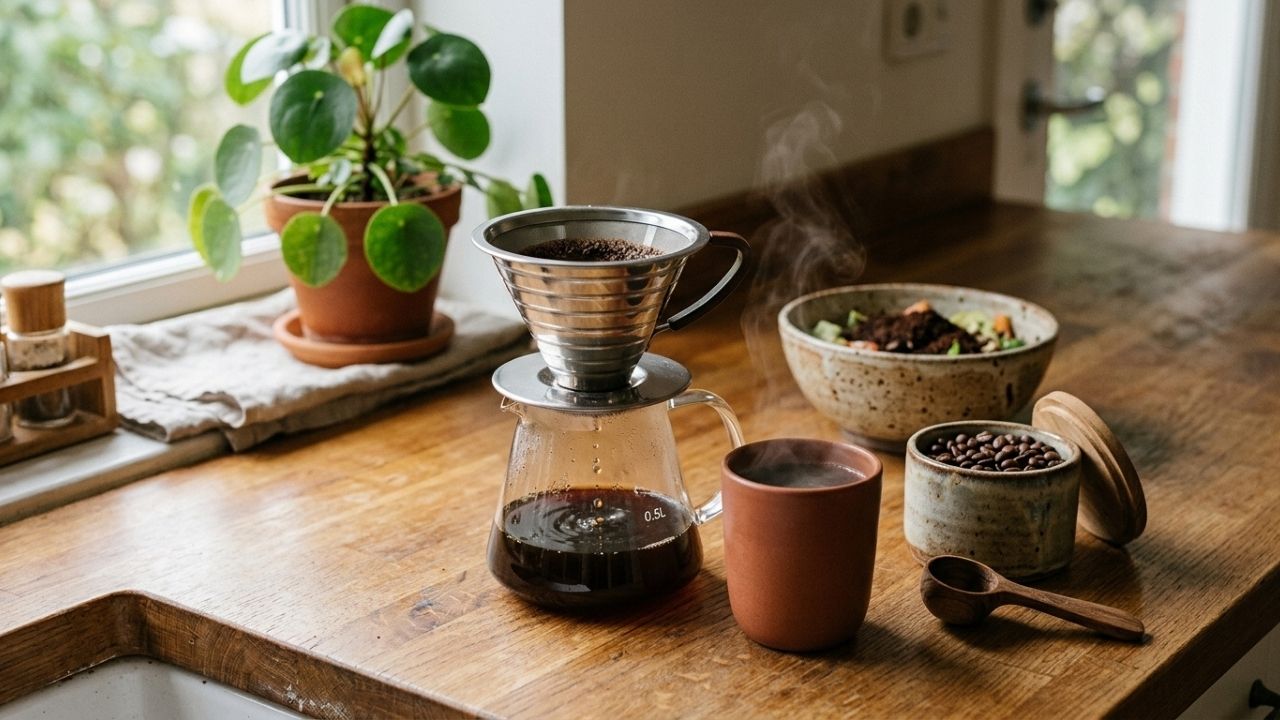
Pour over coffee has grown in popularity for good reason. It gives the brewer control over water temperature, pour speed, and steeping time, which leads to a cleaner, more balanced cup. Pairing a pour over dripper with a reusable metal or cloth filter keeps the process almost entirely waste free.
Moka Pots and Stovetop Brewers
Moka pots, often used for a strong, espresso style coffee, use no filters at all. Ground coffee sits in a metal basket while water is heated below it, pushing steam and hot water through the grounds. These brewers are durable, often lasting decades with proper care, which makes them a genuinely long term investment rather than a disposable appliance.
Cold Brew at Home
Cold brew has become a favorite for warmer months, and it is easy to make at home with a reusable mesh bag or a large jar with a fine strainer. Ground coffee steeps in cold water for twelve to twenty four hours, then gets strained. This method skips filters and packaging entirely, and the concentrate can be stored in a reusable glass container for up to two weeks.
Skipping the Pods
Single serve coffee pods are one of the biggest contributors to coffee related waste. Most are made from a mix of plastic and aluminum that is difficult to recycle, and billions end up in landfills each year. For people who love the convenience of a pod machine, there are still ways to reduce waste:
- Reusable pod inserts that can be filled with fresh ground coffee and used repeatedly
- Compostable pod options made from plant based materials, though these still require checking whether a local composting facility accepts them
- Switching to a manual brewing method for at home use while saving the pod machine for guests or travel
Sustainable Coffee Storage
How coffee is stored affects both its freshness and the amount of packaging waste generated over time. Buying coffee beans in bulk from a refill station, when available, eliminates packaging altogether. For those without access to bulk coffee, buying larger bags less frequently reduces the overall amount of packaging compared to buying small bags weekly.
Once home, coffee should be stored properly to preserve flavor and reduce the temptation to toss out stale coffee.
Best Practices for Storing Coffee
- Keep coffee in an airtight container away from light and heat
- Store whole beans rather than pre-ground coffee, since beans stay fresh longer
- Use a reusable canister made of glass, ceramic, or stainless steel instead of the original bag
- Avoid refrigerating or freezing coffee daily, as moisture exposure can affect flavor; instead, freeze only if storing long term in a sealed, airtight container
Comparing Brewing Methods at a Glance
| Brewing Method | Waste Produced | Reusability | Flavor Profile |
|---|---|---|---|
| Reusable filter drip | Minimal, just rinsing needed | High, lasts years | Clean and balanced |
| French press | Only spent grounds | High, lasts years | Bold and full bodied |
| Pour over with reusable cone | Minimal | High, lasts years | Bright and nuanced |
| Moka pot | None from brewing itself | Very high, decades of use | Strong, espresso like |
| Cold brew at home | Minimal, reusable straining tools | High | Smooth and mellow |
| Single use pods | High, mixed material waste | Low, disposable by design | Consistent but variable quality |
What to Do with Used Coffee Grounds
One of the easiest ways to reduce coffee waste is to give used grounds a second life instead of tossing them in the trash. Coffee grounds are rich in nitrogen and break down well, making them useful well beyond the compost bin.
Composting Coffee Grounds
Used grounds can be added directly to a compost pile or bin, where they act as a nitrogen rich addition alongside carbon rich materials like dried leaves or cardboard. Coffee grounds also help improve the texture of compost, making it easier for beneficial microbes to break everything down evenly.
Around the Garden
Coffee grounds can be sprinkled lightly around acid loving plants, mixed into garden soil to improve drainage, or used to deter certain pests. They should be used in moderation, since large concentrations of coffee grounds can affect soil pH more than most plants prefer.
Around the Home
- Natural odor absorber for the refrigerator or shoe cabinet
- Gentle exfoliant when mixed with a small amount of oil for a homemade scrub
- Natural cleaning scrub for pots and pans, since the coarse texture helps lift stuck on residue
Choosing Sustainably Sourced Coffee
Beyond brewing habits, the coffee itself matters. Looking for beans that carry recognized sustainability or fair trade certifications helps support farming practices that protect soil health, water sources, and the livelihoods of farming communities. Shade grown coffee, in particular, tends to support more biodiversity, since it is grown under a canopy of trees rather than on cleared land.
Buying from local roasters is another way to reduce the footprint of a coffee habit. Local roasters often use less packaging, offer refillable options, and roast in smaller batches, which means fresher coffee with fewer resources spent on long distance shipping and storage.
Building a Low-Waste Coffee Routine That Sticks
Switching to a more sustainable coffee routine does not need to happen all at once. Trying to change every habit overnight often leads to frustration and giving up. Instead, small, steady changes tend to last longer.
A Simple Starting Point
- Start with one swap, such as replacing paper filters with a reusable one
- Keep a small compost container near the coffee station for used grounds
- Bring a reusable cup when buying coffee out instead of relying on disposable cups
- Buy beans in larger quantities or from bulk bins when possible
- Choose a durable brewing tool built to last for years rather than a disposable option
Making It a Habit
Consistency matters more than perfection. A person does not need to overhaul their entire coffee setup in one weekend. Replacing one disposable item at a time, and noticing how much less trash accumulates, tends to build motivation naturally. Over a few months, these small shifts can add up to a coffee routine that feels just as comforting as before, only with far less waste behind it.
Final Thoughts
A daily cup of coffee does not have to come with a pile of waste attached to it. With a few simple swaps, from reusable filters and durable brewing tools to smarter storage and composting used grounds, anyone can build a coffee routine that feels good to drink and good for the planet.
The ritual stays the same. The only thing that changes is what gets left behind.