Grocery shopping is one of those weekly tasks that most people do without thinking twice. Yet it is also one of the biggest opportunities for someone to reduce their environmental footprint. Every trip to the store involves choices about packaging, transportation, food waste, and resource use.
Small adjustments made consistently over time can add up to a meaningful difference for the planet and, often, for a household budget too.
Anyone interested in living a more eco-friendly lifestyle does not need to overhaul their entire routine overnight. Sustainable grocery shopping is really about being more intentional. It means paying attention to where food comes from, how it is packaged, how much is actually needed, and what happens to it after it leaves the store. This article walks through practical, easy to apply strategies that make grocery trips gentler on the environment without making them complicated or expensive.
Why Sustainable Grocery Shopping Matters
Food production and distribution account for a significant share of global greenhouse gas emissions. Growing, processing, packaging, and transporting groceries all require energy and resources. On top of that, a large portion of food purchased by households ends up wasted, which means the resources used to produce it were wasted too.
Making grocery shopping more sustainable helps in several ways:
- It reduces the demand for single-use plastics and excessive packaging
- It supports farming practices that are gentler on soil, water, and biodiversity
- It cuts down on food waste, which lowers methane emissions from landfills
- It often supports local economies and shorter supply chains
- It can save money by encouraging more mindful purchasing habits
None of this requires perfection. Even shifting a few habits can create a ripple effect that benefits both the environment and the shopper’s wallet.
Plan Before Heading to the Store
One of the simplest and most overlooked ways to shop more sustainably is to plan ahead. Impulse purchases often lead to food waste, unnecessary packaging, and higher spending.
Make a List Based on What Is Already at Home
Before writing a grocery list, it helps to check the fridge, freezer, and pantry first. This prevents duplicate purchases and encourages the use of ingredients that are close to expiring. A quick five minute inventory check can prevent a surprising amount of waste.
Plan Meals for the Week
Meal planning is one of the most effective sustainability tools available to the average shopper. When someone knows exactly what they are cooking, they buy only what they need. This reduces overbuying, limits impulse decisions, and makes it easier to use every ingredient before it spoils.
Shop with a Reusable List
Whether it is a notes app or a small notebook kept in a bag, having a list on hand reduces the temptation to buy extra items that are not needed. It also speeds up the shopping trip, which can reduce the urge to browse and add unplanned products to the cart.
Choose Reusable Over Disposable
Packaging waste is one of the most visible parts of grocery shopping, and it is also one of the easiest areas to improve.
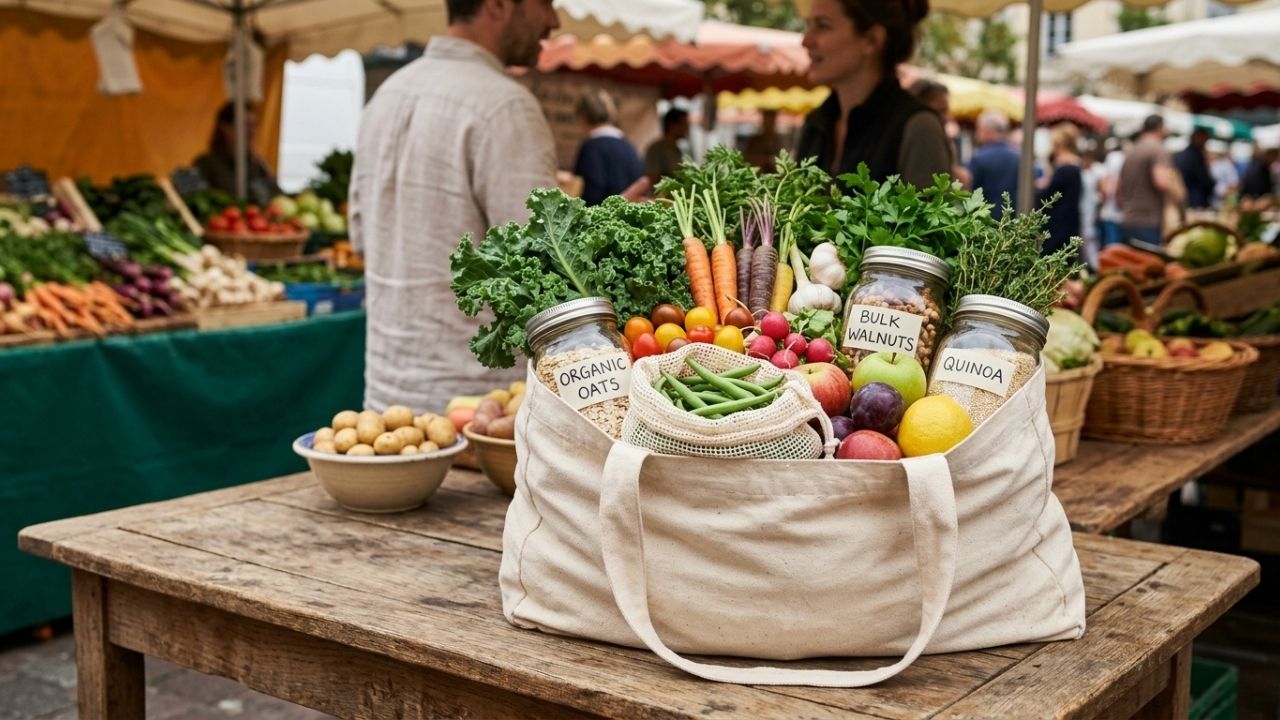
- Bring reusable shopping bags instead of relying on single-use plastic ones
- Use produce bags made of mesh or cloth instead of thin plastic ones for fruits and vegetables
- Bring reusable containers or jars to stores that allow bulk bin refills
- Choose products packaged in glass or paper over plastic when the option is available
- Keep a set of bags in the car or by the front door so they are never forgotten
Over time, these small swaps prevent hundreds of plastic bags and containers from ending up in landfills or waterways.
Shop the Bulk Bins When Possible
Bulk bins allow shoppers to buy exactly the amount they need, which reduces both packaging waste and food waste. Items like grains, nuts, seeds, dried fruit, pasta, and spices are commonly available in bulk sections.
Buying in bulk also tends to be more affordable since shoppers are not paying for packaging design or branding. For someone trying to reduce single use plastic specifically, this is one of the most impactful habits to build.
Prioritize Local and Seasonal Produce
Produce that travels shorter distances typically has a smaller carbon footprint than items flown or shipped from far away. Seasonal produce is also usually fresher, more affordable, and requires less energy intensive storage.
Benefits of Choosing Local and Seasonal Foods
- Reduces emissions associated with long distance transportation
- Supports local farmers and smaller agricultural businesses
- Often costs less due to lower shipping and storage needs
- Tends to be fresher and more flavorful since it has not traveled far
- Encourages variety in the diet as the seasons change
Farmers markets, community supported agriculture programs, and local co-ops are great places to find seasonal produce. Many grocery stores also label locally sourced items, making it easier to identify them while shopping.
Reduce Meat and Dairy Consumption Gradually
Animal agriculture, particularly beef and dairy production, tends to have a higher environmental footprint compared to plant based foods due to land use, water consumption, and methane emissions. Someone does not need to become fully plant based to make a difference. Small, gradual reductions can still have a meaningful impact.
- Try incorporating one or two meat-free meals per week
- Choose smaller portions of meat rather than eliminating it completely
- Explore plant based proteins like beans, lentils, chickpeas, and tofu
- Choose dairy alternatives occasionally, such as oat or soy based products
This approach is sustainable in every sense of the word. It is easier to maintain long term and does not require drastic lifestyle changes.
Pay Attention to Packaging and Labels
Understanding what is on a label can help shoppers make more informed decisions at the store.
| Label or Term | What It Generally Means |
|---|---|
| Certified Organic | Grown without synthetic pesticides or fertilizers |
| Fair Trade | Supports fair wages and working conditions for producers |
| Recyclable Packaging | Packaging that can be processed through standard recycling programs |
| Compostable Packaging | Breaks down naturally, often in industrial composting facilities |
| Locally Grown | Produced within a shorter distance from the point of sale |
It is worth noting that not all eco-labels are regulated the same way, so shoppers benefit from learning which certifications are meaningful in their region and which are more about marketing.
Reduce Food Waste at the Source
Food waste is one of the largest contributors to a household’s environmental footprint, and grocery shopping habits play a direct role in how much waste is generated.
Buy Only What Will Realistically Be Used
It is easy to overestimate how much produce or perishable food will actually get eaten in a week. Buying smaller quantities more frequently, especially for fresh items, can help reduce spoilage.
Choose Imperfect Produce
Many stores now sell “ugly” or imperfect fruits and vegetables at a discount. These items are just as nutritious as their perfectly shaped counterparts, and buying them helps reduce the amount of produce that gets discarded simply for cosmetic reasons.
Understand Expiration Labels
Many people throw away food based on “best by” or “sell by” dates, even though these labels often refer to quality rather than safety. Learning the difference can prevent a lot of unnecessary waste.
Bring Your Own Bags and Containers Consistently
Consistency matters more than perfection. It helps to build small habits that make reusable items part of the regular routine rather than something used occasionally.
- Keep reusable bags in a car, backpack, or by the front door
- Store a collapsible bag in a purse or jacket pocket for unplanned trips
- Wash reusable produce bags and containers regularly so they stay ready to use
- Set a reminder on a phone before heading out to shop
Building these habits takes a bit of effort at first, but they quickly become second nature.
Support Stores with Sustainable Practices
Not all grocery stores operate the same way. Some actively reduce packaging, source locally, or offer bulk and refill stations, while others focus less on sustainability. Choosing to shop at stores that align with these values, even occasionally, can encourage more sustainable practices across the industry.
Shoppers can also give feedback directly to store managers about wanting more bulk options, less plastic packaging, or more local produce. Consumer demand plays a real role in shaping what stores choose to offer.
Small Habits That Make a Big Difference
Sustainable grocery shopping does not require a complete lifestyle overhaul. It is built through small, repeatable habits such as:
- Planning meals and checking inventory before shopping
- Bringing reusable bags and containers
- Choosing bulk, local, and seasonal options when possible
- Reducing meat and dairy consumption gradually
- Paying attention to labels and packaging materials
- Minimizing food waste through mindful purchasing
Each of these actions may seem small on its own, but together they create a noticeably lighter environmental footprint over time.
Final Thoughts
Making grocery shopping more sustainable is less about achieving perfection and more about building consistent, mindful habits.
Every reusable bag brought from home, every seasonal vegetable chosen over an imported one, and every meal planned instead of wasted contributes to a larger positive impact.
For anyone interested in living a more eco-friendly lifestyle, the grocery store is one of the easiest and most accessible places to start making a difference, one shopping trip at a time.