Parents today have more toy choices than ever before, yet many are turning back to something simple and timeless: wood.
Wooden baby toys have been used for generations, long before plastic filled toy store shelves, and they are making a strong comeback among families who care about sustainability, safety, and quality.
For anyone trying to raise a child while also living a more eco-conscious life, wooden toys offer a meaningful way to align everyday parenting choices with environmental values.
This article looks at why wooden baby toys are worth considering, what makes them different from plastic alternatives, and how they support both a child’s development and a healthier planet.
Why Wooden Toys Are Gaining Popularity Again
Wood was once the default material for children’s toys. Then plastic took over because it was cheap to produce, easy to mold into countless shapes, and lightweight to ship. Over the past decade, though, more parents have started asking questions about what their children are touching, chewing, and playing with every day. That curiosity has led many back to wood.
Wooden toys are not just a nostalgic trend. They represent a genuine shift toward mindful consumption, where parents consider the full life cycle of a product, from the raw material it comes from to what happens when a child eventually outgrows it. This mindset fits naturally into a broader sustainable lifestyle that many families are trying to build, one purchase at a time.
Environmental Benefits of Wooden Baby Toys
A Renewable and Biodegradable Material
Wood comes from trees, which are a renewable resource when harvested responsibly. Unlike plastic, which is derived from petroleum and takes hundreds of years to break down, wood is biodegradable. When a wooden toy finally reaches the end of its life, it returns to the earth far more gently than plastic ever could.
Many wooden toy makers now use wood sourced from sustainably managed forests. Look for toys that carry certification from organizations focused on responsible forestry, since this ensures the trees used were replanted and the surrounding ecosystem was protected during harvesting.
Lower Carbon Footprint in Production
Manufacturing plastic toys involves extracting oil, refining it, and running energy-intensive chemical processes. Wooden toys, especially those made using traditional woodworking methods, generally require less energy to produce. Some are even handcrafted in small workshops, which further reduces the industrial footprint compared to mass plastic production.
Reduced Plastic Waste
Plastic toys often break easily, especially battery-operated or overly detailed ones with small moving parts. Once broken, they are usually thrown away and end up in landfills or oceans. Wooden toys tend to be sturdier and simpler in design, which means fewer of them end up as waste. Choosing wood over plastic, even for just a few toys in the nursery, can meaningfully reduce a household’s overall plastic consumption over the years.
Health and Safety Benefits
Fewer Harmful Chemicals
One of the biggest concerns with plastic toys is the chemicals they may contain, such as phthalates, BPA, and other additives used to make plastic flexible or durable. Babies explore the world through their mouths, which means anything they play with is likely to end up being chewed or sucked on. Wooden toys, particularly those finished with natural oils or beeswax rather than synthetic paints, carry a much lower risk of chemical exposure.
Naturally Antibacterial Properties
Interestingly, wood has natural antibacterial qualities. Studies on wooden cutting boards have shown that bacteria die off faster on wood surfaces compared to plastic ones. While a baby’s toy isn’t a cutting board, the same natural properties of wood can offer a small added layer of hygiene, especially helpful during the teething stage when everything goes straight into a baby’s mouth.
Durability That Reduces Choking Hazards Over Time
Well-made wooden toys are less likely to crack, splinter, or break into small pieces compared to cheaply made plastic toys. This durability reduces the risk of small broken fragments becoming choking hazards, which is a real concern for parents of infants and toddlers.
Developmental Benefits for Babies
Encouraging Open-Ended Play
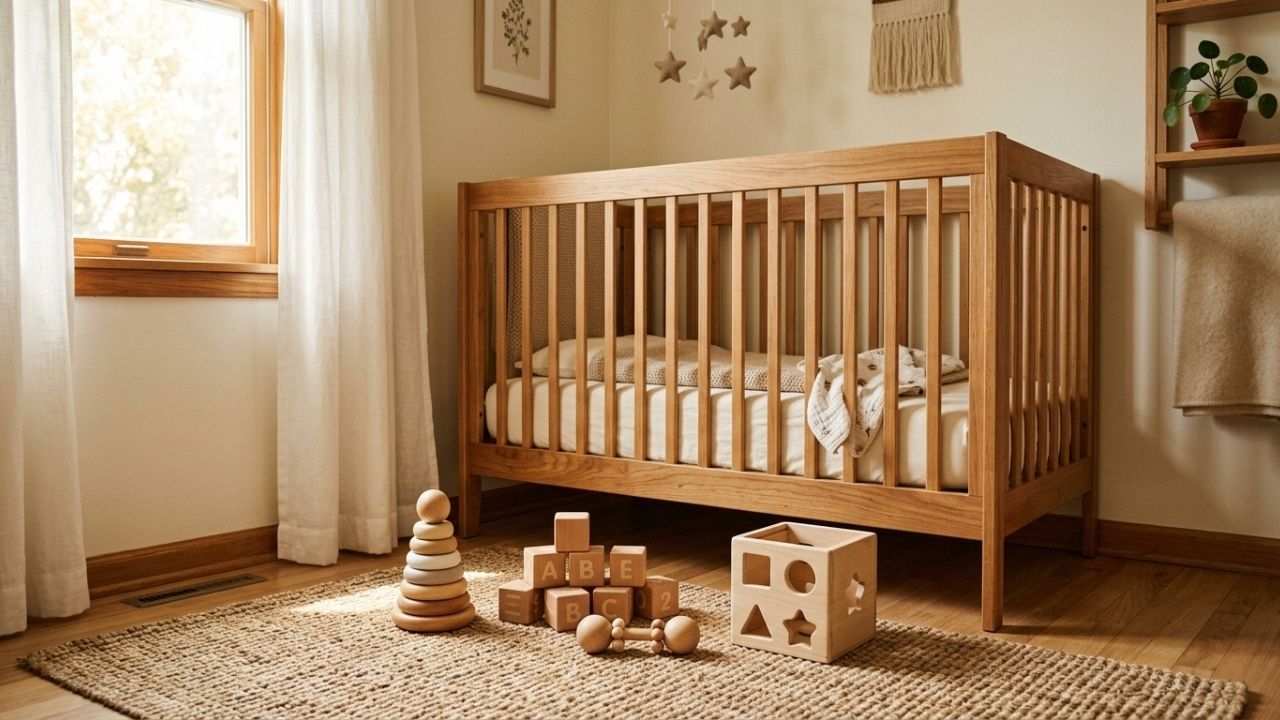
Wooden toys are often simple by design, think of a set of stacking rings, a wooden rattle, or a set of building blocks. This simplicity is actually a strength. Without flashing lights, sounds, or a single predetermined function, children are encouraged to use their imagination to decide how the toy should be used. This kind of open-ended play supports creativity and problem-solving skills far more than toys that do all the work for the child.
Sensory Development
Wood has a natural texture, weight, and temperature that feels different from plastic. Babies benefit from this kind of varied sensory input. The smooth grain, the subtle differences in each piece since no two wooden toys are perfectly identical, and the natural weight of the material all contribute to a richer sensory experience during a critical stage of development.
Supporting Fine Motor Skills
Many wooden toys, such as shape sorters, stacking towers, and simple puzzles, are specifically designed to help babies and toddlers develop hand-eye coordination and fine motor control. The tactile feedback of wood, combined with its slightly heavier weight compared to plastic, can help babies build strength and precision in their hand movements.
Comparing Wooden and Plastic Baby Toys
| Feature | Wooden Toys | Plastic Toys |
|---|---|---|
| Material source | Renewable, biodegradable | Petroleum-based, non-renewable |
| Chemical exposure risk | Generally low, especially with natural finishes | Higher risk from additives like phthalates and BPA |
| Durability | Long-lasting, resistant to cracking | Prone to breaking, especially with heavy use |
| End of life | Biodegrades naturally | Can take centuries to break down |
| Sensory experience | Varied texture, natural weight | Uniform texture, often lighter |
| Noise and lights | Usually quiet and simple | Often includes sounds, lights, batteries |
| Cost | Typically higher upfront cost | Often cheaper upfront |
| Resale and heirloom value | Holds up well, often passed down | Rarely passed down due to wear |
How to Choose Quality Wooden Baby Toys
Not every wooden toy on the market is equally safe or sustainably made. Being an informed shopper matters just as much as choosing wood over plastic in the first place.
- Check for smooth, sanded edges with no rough or splintery surfaces
- Look for non-toxic finishes such as natural plant-based oils, beeswax, or water-based paints
- Choose toys that are appropriately sized for a baby’s age to avoid choking hazards
- Look for sustainable forestry certifications on packaging or product descriptions
- Avoid toys with small detachable parts if buying for infants under one year old
- Consider the toy’s weight and make sure it isn’t too heavy for tiny hands to hold safely
Where to Look for Sustainable Wooden Toys
Small local toy makers, artisan markets, and cooperatives that focus on sustainable materials are often good places to find high-quality wooden toys. Many of these makers are transparent about where their wood comes from and how their toys are finished, which makes it easier for parents to make an informed choice.
Caring for Wooden Baby Toys
Wooden toys can last for years, and sometimes even generations, if they are cared for properly.
- Wipe toys down with a damp cloth rather than soaking them in water
- Avoid leaving wooden toys in direct sunlight for long periods, as this can cause cracking
- Reapply natural oil finishes occasionally to keep the wood conditioned
- Store toys in a dry area to prevent warping or mold growth
- Inspect toys regularly for any rough spots or loose parts that may need light sanding
A Small Choice With a Bigger Impact
Choosing wooden baby toys is a small decision on the surface, but it reflects a much bigger set of values. It is a vote for renewable materials over petroleum-based products, for simplicity over overstimulation, and for durability over disposability. For parents trying to build a more sustainable household, the nursery is often one of the easiest places to start, since baby toys are replaced often and represent a real opportunity to reduce plastic use from the very beginning of a child’s life.
Wooden toys will not solve every environmental challenge on their own, but they are part of a larger pattern of intentional living. Every wooden block, rattle, or stacking toy chosen over a plastic alternative is one less piece of plastic waste in the world and one more natural, safe object in a child’s earliest years of play.
Final Thoughts
Wooden baby toys offer a rare combination of benefits that touch on environmental responsibility, child safety, and healthy development all at once. They are gentler on the planet, often safer for little ones to explore with their hands and mouths, and better suited to encouraging imaginative, screen-free play.
For families working toward a more sustainable lifestyle, choosing wood over plastic in the nursery is a simple, practical step that aligns everyday parenting with long-term environmental care.