Pets bring joy, companionship, and a whole lot of love into a household. But they also come with an environmental footprint that many owners never stop to think about. From the plastic packaging on treats to the mountain of poop bags that pile up in landfills, the pet industry produces a surprising amount of waste every year.
The good news is that living with a furry, feathered, or scaled companion does not have to come at the planet’s expense. With a few thoughtful swaps, pet owners can shrink their environmental impact without sacrificing the quality of care their animals deserve.
This article walks through the most practical and effective eco-friendly alternatives available to pet owners today, covering everything from food and toys to grooming, waste management, and end of life choices.
Why Pet Ownership Has an Environmental Footprint
It might seem strange to think of a wagging tail or a purring cat as a source of environmental strain, but the numbers tell a different story. Meat heavy pet food production requires land, water, and energy. Plastic toys and packaging often end up in landfills or oceans.
Waste disposal, especially for dogs and cats, adds up over the lifetime of a pet. Even something as small as a flea treatment can carry chemicals that affect waterways when they wash off during a bath.
None of this means pet ownership is inherently bad for the environment. It simply means there is room for improvement, and small changes multiplied across millions of households can make a real difference.
Sustainable Pet Food Choices
Food is one of the biggest contributors to a pet’s environmental footprint, so it is a great place to start making changes.
Look for Responsibly Sourced Proteins
Traditional pet food often relies on the same intensively farmed meat used in human food systems. Some brands now source proteins from suppliers that follow more sustainable farming practices, reducing the strain on land and water resources.
Consider Insect Based Protein
Insect based pet food has grown in popularity as a lower impact protein source. Insects require far less land, water, and feed than traditional livestock, and many pets take to the taste without any issue.
Try Local and Small Batch Options
Buying from local pet food makers can cut down on the emissions created by long distance shipping. It also tends to support smaller businesses that are often more transparent about their sourcing.
Reduce Food Waste
Pet owners can also make a difference by simply avoiding overfeeding and properly storing food to prevent spoilage. Composting appropriate leftover pet food packaging, where possible, helps keep it out of landfills.
Eco-Friendly Toys and Accessories
Pet toys are notorious for being made of hard to recycle plastics. Fortunately, more sustainable options are widely available.
- Toys made from natural rubber instead of synthetic plastic
- Rope toys crafted from organic cotton or hemp
- Wooden chew toys sourced from sustainably managed forests
- Recycled fabric toys made from repurposed materials
- Durable toys designed to last years rather than weeks
Choosing well made, long lasting toys over cheap plastic ones that break quickly reduces both waste and the frequency of repurchasing.
Sustainable Bedding and Furniture
Pet beds and furniture can also get an eco-friendly upgrade. Beds filled with recycled polyester fiber, organic cotton covers, and natural wood pet furniture are all widely available now. These options tend to be more durable as well, meaning fewer replacements over a pet’s lifetime.
Waste Management for Pet Owners
Cleaning up after pets is unavoidable, but how that waste is handled makes a big environmental difference.
Biodegradable Poop Bags
Standard plastic poop bags can take hundreds of years to break down. Biodegradable and compostable bags, often made from cornstarch or plant based materials, break down far more quickly and reduce landfill accumulation.
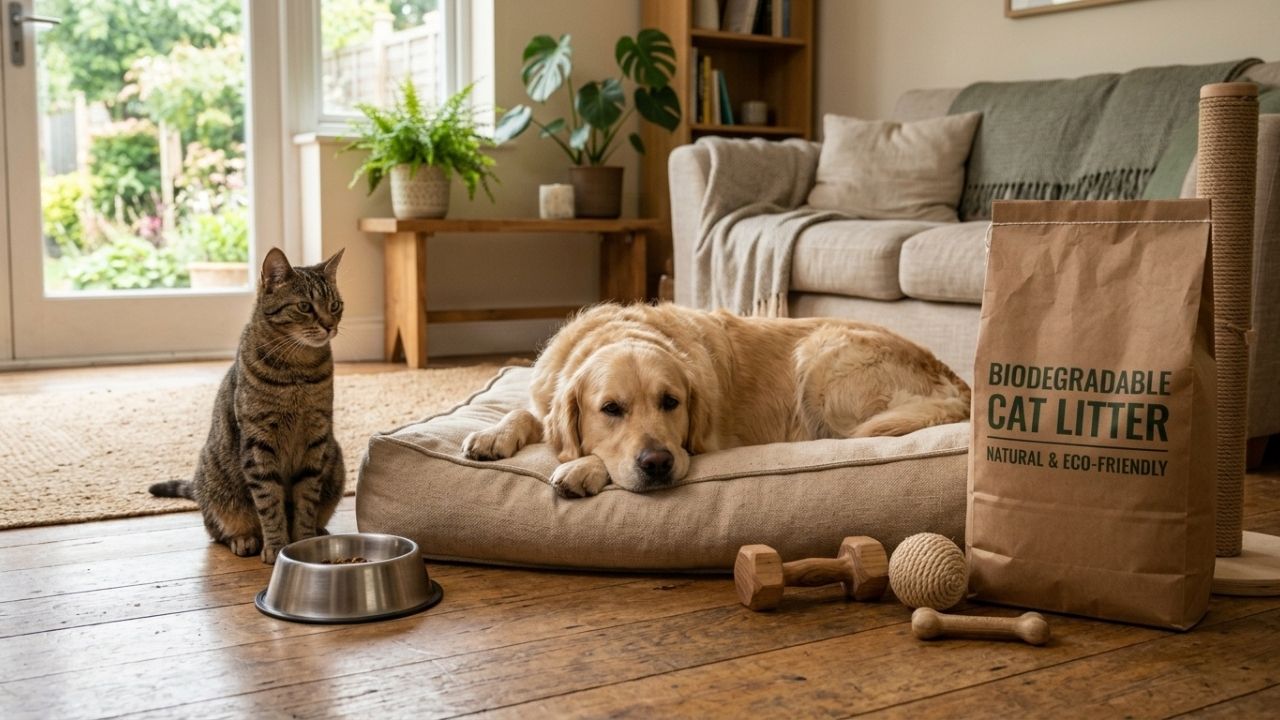
Compostable Cat Litter
Traditional clay based cat litter is strip mined, which disturbs land and is not biodegradable. Alternatives made from the following materials are gentler on the planet:
- Recycled paper
- Wood shavings or pellets
- Walnut shells
- Corn or wheat based materials
These litters often clump well, control odor effectively, and break down far faster than clay.
Dog Waste Composters
For dog owners with outdoor space, a dedicated pet waste composter can be a game changer. These systems use enzymes and bacteria to break down waste safely, away from vegetable gardens, turning it into a manageable byproduct instead of bagged landfill waste.
Grooming the Green Way
Grooming products are another area where small swaps add up.
Natural Shampoos and Conditioners
Many conventional pet shampoos contain synthetic fragrances, parabens, and other chemicals that wash down the drain and into local water systems. Natural, biodegradable shampoos made with plant based ingredients are gentler on both pets and waterways.
Reusable Grooming Tools
Choosing metal grooming tools such as combs and brushes over plastic versions means fewer items ending up in landfills. Many metal tools also last significantly longer.
DIY Grooming Solutions
Some pet owners find success making their own simple grooming solutions using ingredients like oatmeal, coconut oil, and apple cider vinegar. These homemade options cut down on packaging waste and chemical exposure.
Sustainable Flea and Tick Prevention
Chemical flea and tick treatments are effective, but some contain compounds that can be harmful to waterways when they wash off. Pet owners interested in a gentler approach might consider the following:
- Natural repellents made with cedarwood or neem oil
- Regular grooming and flea combing to catch pests early
- Diatomaceous earth for chemical free pest control in the home
- Consulting a veterinarian about lower impact prescription options
It is always worth discussing any change in flea and tick prevention with a vet, since effectiveness and safety can vary by pet and region.
Choosing Sustainable Pet Supplies: A Quick Comparison
| Category | Conventional Option | Eco-Friendly Alternative | Key Benefit |
|---|---|---|---|
| Toys | Plastic squeaky toys | Natural rubber or hemp rope toys | Biodegradable, non-toxic |
| Litter | Clay based litter | Recycled paper or walnut shell litter | Reduces strip mining impact |
| Waste bags | Standard plastic bags | Cornstarch based compostable bags | Breaks down faster |
| Bedding | Synthetic foam bed | Organic cotton and recycled fiber bed | Lower chemical exposure |
| Shampoo | Synthetic fragrance shampoo | Plant based biodegradable shampoo | Safer for waterways |
| Food bowls | Plastic bowls | Stainless steel or bamboo bowls | Long lasting, recyclable |
This table offers a simple starting point for pet owners who want to gradually replace everyday items with greener versions as their current supplies run out.
Adoption Over Buying
One of the most impactful choices a pet owner can make happens before any product purchase at all: choosing to adopt rather than buy from a breeder. Shelters and rescues are full of animals in need of homes, and adoption reduces the demand that fuels overbreeding. It also tends to be more affordable and often includes essentials like initial vaccinations.
Sustainable Travel with Pets
Traveling with pets can also be approached with sustainability in mind.
Choosing Eco-Friendly Carriers
Carriers made from recycled materials or sustainably sourced fabric are becoming more common and offer the same durability as traditional options.
Reducing Single Use Items on the Road
Packing reusable food and water bowls, along with a refillable water bottle, cuts down on the disposable cups and containers that often accompany pet travel.
Supporting Sustainable Pet Brands
As demand grows, more companies are stepping up with genuinely sustainable practices rather than surface level marketing. When evaluating a brand, pet owners might look for the following signs of real commitment:
- Clear information about sourcing and manufacturing
- Minimal or recyclable packaging
- Certifications from recognized environmental organizations
- Transparent supply chains
- A willingness to share sustainability goals and progress, not just finished claims
It helps to look past vague terms like “green” or “natural” on packaging and instead check for specific, verifiable details about materials and practices.
Small Habits That Make a Big Difference
Beyond product swaps, everyday habits play a major role in reducing a pet’s environmental footprint.
- Buying in bulk to cut down on packaging waste
- Repairing toys and accessories instead of replacing them at the first sign of wear
- Donating gently used pet items instead of throwing them away
- Choosing reusable food storage containers over disposable bags
- Walking or biking to nearby pet stores instead of driving when possible
None of these habits require a major lifestyle overhaul. They simply ask pet owners to pause and consider a slightly greener option when one is available.
End of Life Considerations
It is not the easiest topic, but sustainable choices extend to end of life care as well. Options like aquamation, also known as water cremation, tend to have a lower environmental impact than traditional flame based cremation. Biodegradable urns and eco-friendly burial options are also increasingly available for pet owners who want their companion’s final resting place to reflect the values they lived by.
Making the Transition Gradually
Switching every pet product overnight is not realistic for most households, and it is not necessary either. A more sustainable approach is to replace items as they naturally wear out or run low. Starting with high impact swaps, such as compostable waste bags or biodegradable litter, is often the easiest and most immediately noticeable place to begin.
Pet owners who take a gradual, thoughtful approach tend to stick with these changes longer than those who try to change everything at once. Building new habits slowly also makes it easier to notice which products actually work well for a specific pet’s needs.
Final Thoughts
Caring for a pet and caring for the planet do not have to be competing priorities. With mindful choices around food, toys, waste management, grooming, and even end of life care, pet owners can significantly reduce their environmental footprint while still giving their animals a happy, healthy life.
Every small swap, from a compostable poop bag to a natural rubber chew toy, adds up over time.
The path to a more sustainable pet household does not require perfection, just a willingness to make better choices one step at a time.