Plastic food wrap has been a kitchen staple for decades. It clings to bowls, seals up leftovers, and keeps sandwiches fresh for lunchboxes. But for anyone trying to live a more sustainable and eco-friendly lifestyle, that thin roll of plastic film raises a bigger question.
It is used once, thrown away, and then sits in a landfill for hundreds of years. The good news is that there are now more alternatives to disposable food wrap than ever before, and many of them work just as well, if not better, than the plastic version.
This article walks through the most popular reusable and eco-friendly options, how they compare, and how to choose the right one for different kitchen needs.
Why Ditch Disposable Food Wrap in the First Place
Before diving into alternatives, it helps to understand why so many people are moving away from single-use plastic wrap.
- Most plastic wrap is made from polyvinyl chloride (PVC) or low-density polyethylene (LDPE), both of which are derived from fossil fuels.
- It is rarely recyclable because of how thin and flexible it is, meaning it almost always ends up in the trash.
- Plastic wrap can shed microplastics, especially when it touches warm or fatty foods.
- Producing plastic film requires energy and resources that could be avoided with reusable options.
- Over time, buying roll after roll of wrap actually costs more money than investing in a reusable product once.
Once these points sink in, it becomes clear why so many eco-conscious households are looking for a swap that does not sacrifice convenience.
Beeswax Wraps
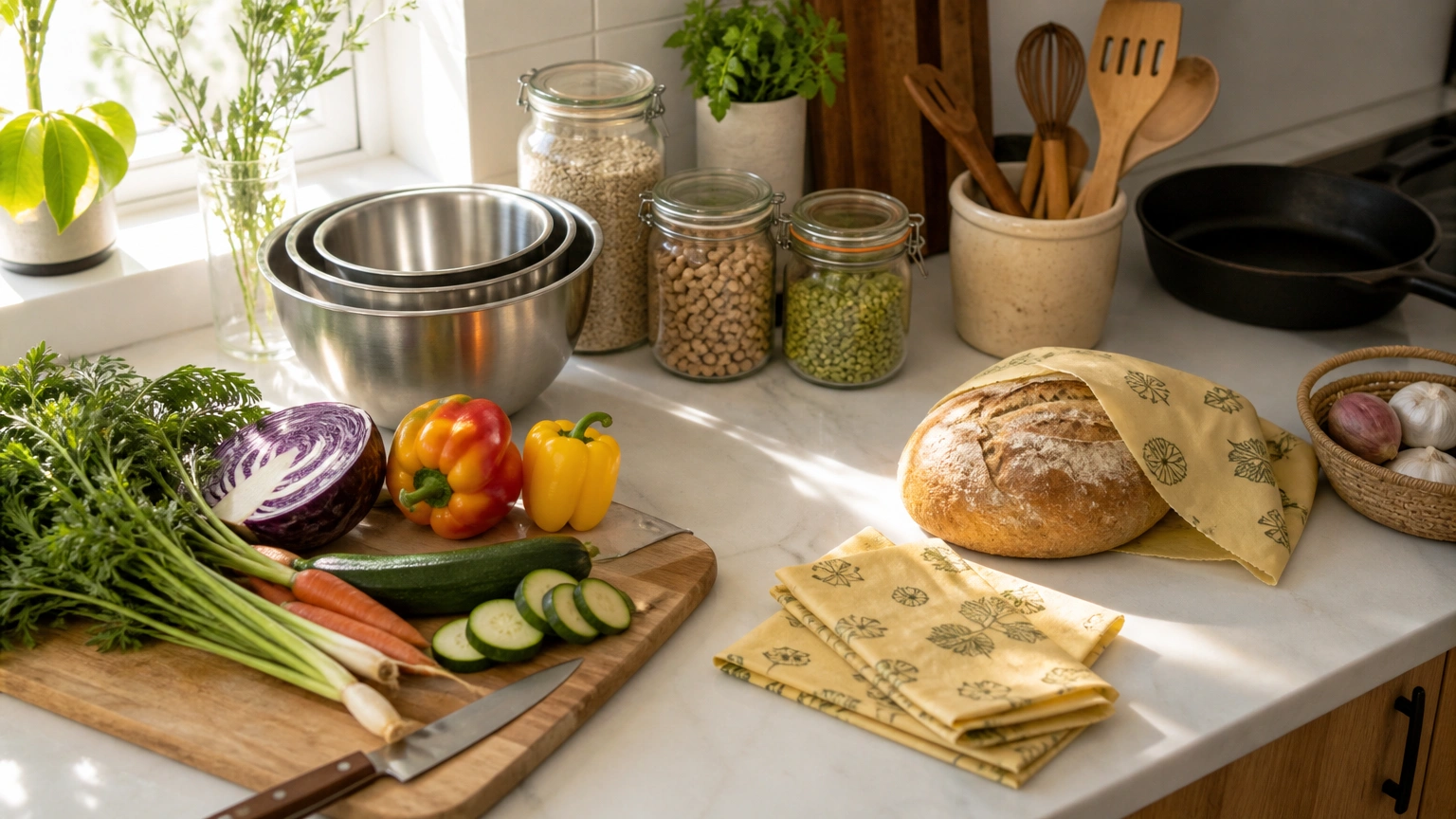
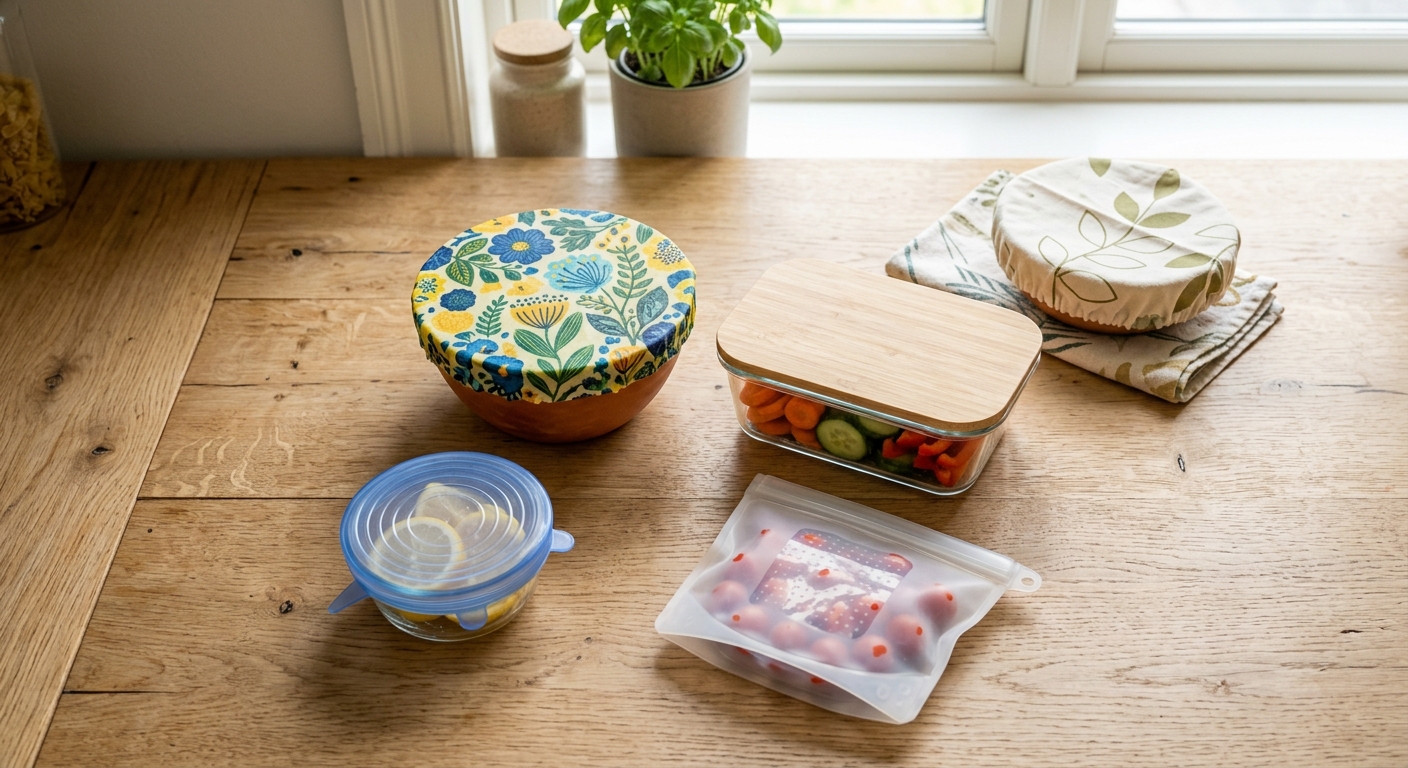
Beeswax wraps are probably the most well known alternative to plastic wrap, and for good reason. They are made from cotton fabric coated in a mixture of beeswax, tree resin, and jojoba or coconut oil. The wax makes the fabric pliable and slightly sticky, so it molds around bowls, cut fruit, or sandwiches and holds its shape.
How to use them
- Warm the wrap slightly in your hands to soften it.
- Press it around the food or over the bowl.
- The natural stickiness from the wax will help it stay in place.
- Wash with cool water and a mild dish soap, then air dry.
Beeswax wraps typically last around a year with regular use before they need to be re-waxed or replaced. They are not ideal for wrapping raw meat or very hot food, since heat can melt the wax coating.
For those who prefer a vegan option, there are also plant-wax wraps made with candelilla or soy wax instead of beeswax.
Silicone Food Covers and Stretch Lids
Silicone stretch lids look similar to plastic wrap in function but are made from a durable, flexible silicone material that can be washed and reused hundreds of times. They stretch over bowls, cups, jars, and even cut fruit like avocados or melons.
Silicone covers are a favorite among people who want something that:
- Can go in the dishwasher for easy cleaning
- Is safe for the freezer, microwave, and oven up to a certain temperature
- Comes in multiple sizes to fit various containers
- Lasts for years without degrading
Because silicone is heat resistant, it is a good choice for wrapping warm dishes, which beeswax wraps cannot always handle.
Reusable Silicone Bags
For anyone who relies on plastic sandwich or freezer bags, reusable silicone bags are a natural next step. These bags are typically leakproof, freezer safe, and can be washed by hand or in the top rack of a dishwasher. They work well for:
- Packing lunches and snacks
- Freezing soups, sauces, or leftovers
- Storing sliced vegetables and fruit
- Marinating meat or tofu
Many of these bags stand upright on their own, which makes filling them much easier than a flimsy plastic bag.
Glass and Stainless Steel Containers
Sometimes the best replacement for wrap is not a wrap at all. Swapping out wrap-and-bowl combinations for containers with built-in lids removes the need for disposable film entirely.
- Glass containers are transparent, so it is easy to see what is inside without opening them.
- Stainless steel containers are lightweight, shatterproof, and great for packed lunches.
- Both materials do not absorb odors or stains the way plastic can over time.
- Lids create an airtight seal, keeping food fresher for longer than wrap alone.
This method requires a small upfront investment in a set of containers, but they can last for many years, making them one of the most cost-effective long-term solutions.
Cloth Bowl Covers
Cloth bowl covers are essentially fabric versions of a shower cap, sized to fit over bowls and dishes. They usually have an elastic edge that snaps snugly around the rim.
These covers work particularly well for:
- Covering bowls of rising bread dough
- Keeping dust off dishes at a potluck or barbecue
- Covering salads or cut produce in the fridge
They are easy to make at home from scrap fabric and elastic, which makes them a budget-friendly do-it-yourself project as well as a store-bought option.
Parchment Paper and Beeswax Paper Bags
For wrapping sandwiches, baked goods, or cheese, unbleached parchment paper or beeswax paper bags offer a compostable alternative. Unlike plastic wrap, parchment paper can often be composted after use, especially if it is unbleached and free of coatings.
Beeswax paper bags are pre-shaped, so there is no folding or wrapping involved. Food goes in, the top folds over, and it is ready to toss in a lunch bag or pantry shelf.
Comparing the Alternatives
Choosing the right option often comes down to what kind of food is being stored and how it will be used. Here is a quick comparison to help decide.
| Alternative | Best For | Reusable? | Dishwasher Safe? | Handles Heat? |
|---|---|---|---|---|
| Beeswax wraps | Sandwiches, cut fruit, bowl covers | Yes | No | No |
| Silicone stretch lids | Bowls, jars, cups | Yes | Yes | Yes |
| Reusable silicone bags | Snacks, freezer storage, marinating | Yes | Yes | Yes |
| Glass or steel containers | Leftovers, meal prep | Yes | Yes | Yes |
| Cloth bowl covers | Dough, salads, quick covers | Yes | Hand wash | No |
| Parchment or beeswax paper bags | Baked goods, sandwiches | Limited reuse | No | No |
Tips for Making the Switch Easier
Moving away from disposable wrap does not need to happen overnight. A gradual approach tends to stick better than trying to replace everything at once.
- Start with one category, such as lunch packing, and switch that first.
- Keep a small basket near the fridge with reusable wraps and lids so they are easy to grab.
- Wash reusable items right after use so they are always ready for the next meal.
- Repurpose empty glass jars from sauces or jams as extra storage containers.
- Avoid wrapping raw meat in beeswax wraps or cloth covers, since these materials are harder to sanitize thoroughly. Glass or steel containers are a better fit for raw proteins.
Caring for Reusable Wraps and Covers
Getting the most life out of these products comes down to proper care.
- Always wash beeswax wraps in cool or lukewarm water, since hot water melts the wax coating.
- Store silicone lids and bags flat or hung up to avoid permanent creases.
- Let cloth covers fully air dry before folding them away to prevent mildew.
- Keep beeswax wraps away from direct sunlight and heat sources when not in use.
A Small Swap With a Big Impact
Disposable food wrap feels convenient in the moment, but the environmental cost adds up roll after roll. Switching to reusable alternatives like beeswax wraps, silicone lids, reusable bags, or simple glass containers is one of the easier changes to make in a kitchen, and the payoff lasts for years rather than minutes.
For anyone working toward a more sustainable lifestyle, this is a great place to start. It does not require a total kitchen overhaul, just a few thoughtful swaps that reduce waste one meal at a time. Over time, these small changes add up to fewer trips to the store for wrap refills, less plastic in the trash, and a kitchen that runs a little more in line with the values of a low-waste life.