Feeding a baby comes with enough decisions to make any parent’s head spin, and the question of what to actually put the food in is one that more and more families are thinking about. Disposable baby food pouches have become a staple on grocery store shelves because they are convenient, mess free, and easy to toss into a diaper bag.
But for anyone trying to raise their little one with a smaller environmental footprint, those squeezable pouches raise a real concern. Most of them are made from multiple layers of plastic and foil that cannot be recycled through curbside programs, which means millions end up in landfills every year.
The good news is that going pouch free does not mean giving up convenience. There are plenty of reusable and eco-friendly alternatives that fit into a busy parent’s routine just as easily, while cutting down on plastic waste and often saving money over time.
This article walks through the most practical options, how they compare, and tips for making the switch without adding stress to mealtime.
Why Disposable Pouches Are a Problem for the Environment
Before diving into alternatives, it helps to understand why so many eco-conscious parents are moving away from disposable pouches in the first place.
- They are made of multilayer plastic and foil, which makes them nearly impossible to recycle in most municipal systems.
- Manufacturing pouches requires petroleum-based plastics, contributing to fossil fuel demand.
- A family feeding a baby purees daily can go through hundreds of pouches in a single year.
- Discarded pouches often end up in oceans and waterways, where they break down into microplastics.
- Even “recyclable” claims on packaging can be misleading, since specialized drop-off programs are required and rarely available locally.
Once these facts are on the table, it becomes easier to see why so many parents are looking for something better.
Reusable Squeeze Pouches
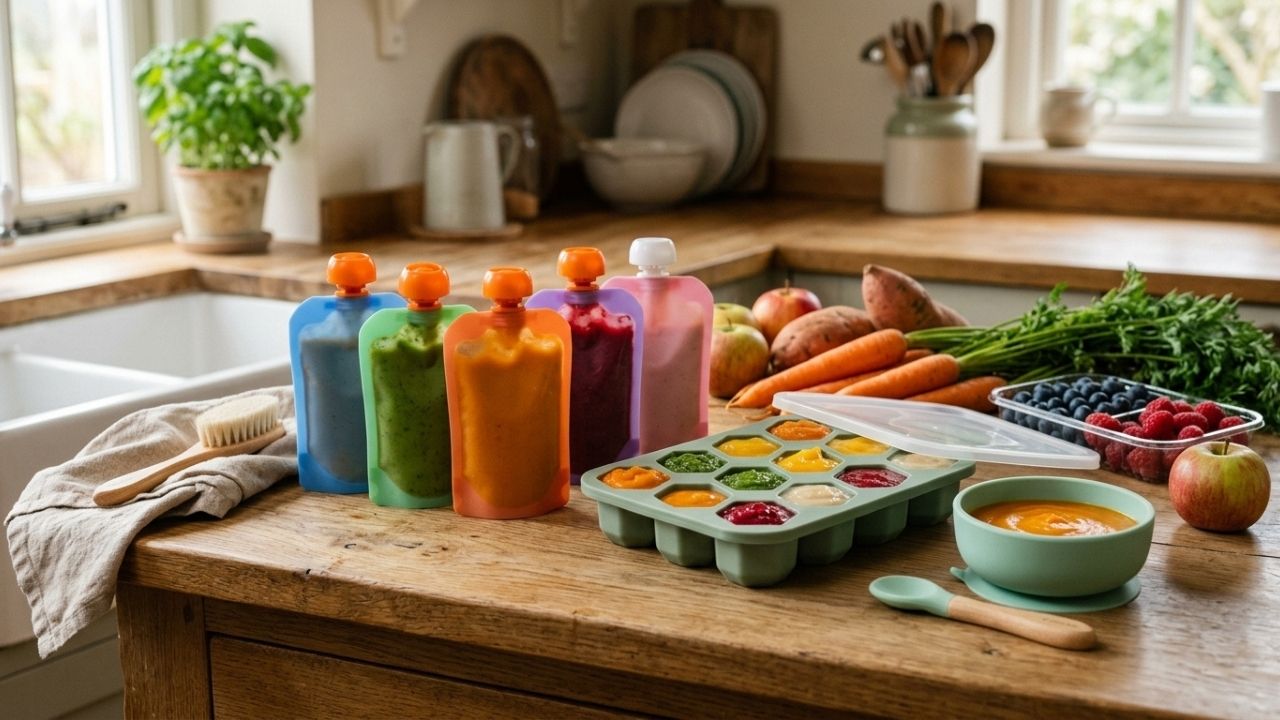
The most direct swap for a disposable pouch is a reusable version. These are typically made from food-grade silicone or BPA-free plastic and can be filled with homemade or store-bought purees, then washed and refilled again and again.
Benefits of Reusable Pouches
- They dramatically cut down on single-use plastic waste.
- Many are dishwasher safe, making cleanup simple.
- Parents can control exactly what goes inside, avoiding preservatives or added sugar.
- Wide, easy-fill openings make them simple to load with a spoon or funnel.
- Some brands offer pouches with measurement markings, which is handy for portioning.
Things to Keep in Mind
- Reusable pouches need to be washed and dried thoroughly between uses to prevent mold in the seams.
- They require a bit more upfront planning since food needs to be prepared and portioned ahead of time.
- Silicone pouches are generally more durable and easier to clean than plastic ones, though they cost more initially.
Silicone Baby Food Freezer Trays
For parents who like to batch cook, silicone freezer trays are one of the most popular pouch alternatives. Purees, mashed fruits, and vegetables can be poured into individual compartments, frozen, then popped out and stored in a reusable container or bag.
- They allow parents to prepare a week or more of meals in one cooking session.
- Portions are pre-measured, which reduces guesswork at feeding time.
- Silicone is flexible, making it easy to release frozen cubes without breaking them.
- Trays with lids help prevent freezer burn and keep food fresher longer.
This method pairs well with a small reusable pouch or a simple bowl and spoon, since parents can just thaw a cube or two as needed rather than committing to a large batch.
Reusable Bowls with Suction Bases
Many babies eventually move away from purees and toward feeding themselves, and reusable bowls with suction bottoms are a favorite for this stage. They stick firmly to a highchair tray, which cuts down on the classic toss-the-bowl-on-the-floor game.
- Suction bowls reduce mess during self-feeding.
- Most are made from silicone or bamboo composite, both of which are more sustainable than plastic.
- They are easy to wash by hand or in the dishwasher.
- Many come with matching lids, so leftovers can be stored in the same container.
Stainless Steel or Bamboo Containers
For parents who prefer to avoid plastic and silicone altogether, stainless steel and bamboo containers are worth a look. These are especially popular for older babies and toddlers who are eating a wider variety of textures.
- Stainless steel does not absorb odors or stains the way plastic can.
- Bamboo containers are biodegradable at the end of their life, unlike plastic.
- Both materials tend to be more durable, which means less frequent replacement.
- They work well for both purees and finger foods, so they can grow with the child.
Making Homemade Baby Food
Perhaps the most impactful change a family can make is shifting toward homemade baby food. This does not have to mean spending hours in the kitchen every day. With a bit of planning, it can actually save time in the long run.
Simple Steps for Homemade Purees
- Choose fresh or frozen fruits and vegetables, since frozen produce is often picked and flash frozen at peak ripeness.
- Steam or roast the produce until soft, which helps retain more nutrients than boiling.
- Blend with a small amount of water, breast milk, or formula to reach the right consistency.
- Portion into a freezer tray or reusable pouch.
- Freeze in batches and thaw only what is needed for each meal.
Homemade purees give parents full control over ingredients and cut out the packaging waste entirely. It also tends to be more affordable than buying pre-made pouches week after week.
Comparing the Alternatives
Every family’s routine looks different, so it helps to compare these options side by side.
| Alternative | Best For | Reusability | Ease of Cleaning | Approximate Upfront Cost |
|---|---|---|---|---|
| Reusable squeeze pouches | On-the-go feeding | High | Moderate | Low to moderate |
| Silicone freezer trays | Batch cooking at home | High | Easy | Low |
| Suction bowls | Self-feeding toddlers | High | Easy | Low |
| Stainless steel containers | Long-term durability | Very high | Easy | Moderate |
| Bamboo containers | Eco-conscious storage | High | Easy | Moderate |
| Homemade purees | Full ingredient control | N/A | N/A | Low over time |
Tips for a Smooth Transition
Switching away from disposable pouches can feel like a big change, especially for parents who are used to grabbing one on the way out the door. A few small habits can make the shift much easier.
- Keep a couple of reusable pouches pre-filled in the fridge or freezer so there is always something ready to grab.
- Invest in a small handheld blender or food processor to speed up puree making.
- Set aside one afternoon a week for batch cooking and freezing portions.
- Pack a cooler bag with an ice pack when heading out with pre-filled reusable pouches.
- Wash pouches and trays right after use to prevent food from drying and sticking inside seams.
Addressing Common Concerns
Some parents worry that reusable options will be harder to manage while traveling or during busy weeks. It helps to remember that a full switch is not required overnight.
- Many families use a mix of homemade food at home and the occasional store-bought pouch while traveling.
- Reusable pouches can be washed with a bottle brush, which reaches into the seams more effectively than a regular sponge.
- Buying two or three extra reusable pouches or containers reduces the pressure to wash immediately after every meal.
- Silicone products are generally freezer, microwave, and dishwasher safe, which adds flexibility for busy schedules.
The Bigger Picture
Choosing reusable alternatives to disposable baby food pouches is a small decision that adds up over time. A baby who eats purees for even a year can go through hundreds of single-use pouches, so switching to reusable options can prevent a significant amount of plastic waste from ever being created. It also tends to be gentler on the household budget, since reusable containers and homemade food cost less per serving than pre-packaged pouches.
Beyond the environmental impact, many parents find that homemade purees and reusable containers give them more insight into what their baby is actually eating. There is no ingredient list to decode, no added preservatives to worry about, and full flexibility to introduce new flavors and textures at a pace that fits the family.
Raising a baby sustainably does not require perfection. Even switching a few meals a week away from disposable pouches makes a difference, and small consistent choices tend to be more sustainable in the long run than an all-or-nothing approach. Whether a family chooses reusable squeeze pouches, silicone freezer trays, suction bowls, or simply starts making purees at home, every step away from single-use plastic is a step toward a more eco-friendly start for the next generation.
Final Thoughts
There is no single right answer for every family, and the best approach often ends up being a combination of a few of these alternatives.
A parent might use silicone freezer trays for meal prep at home, reusable pouches for outings, and a suction bowl once the baby moves on to finger foods.
What matters most is finding a system that fits naturally into daily life, since that is what makes a sustainable habit stick for the long haul.