The kitchen is one of the busiest rooms in any home, and it is also one of the biggest sources of household waste. Jars, containers, wrapping, utensils, and even worn out cookware often get tossed the moment they seem past their prime.
For anyone trying to live a more sustainable lifestyle, the kitchen is actually a goldmine of opportunity. Many of the items people throw away every week can be cleaned, repurposed, or given a second life with just a little creativity.
Learning what can be reused instead of discarded is not only good for the planet, it also saves money and reduces the constant need to buy replacements. This guide walks through the most common kitchen products that deserve a second chance, along with practical ideas for how to use them.
Why Reusing Kitchen Items Matters
Before diving into specific items, it helps to understand why this small habit makes such a big difference. Kitchens generate a steady stream of packaging waste, from glass jars to plastic tubs to aluminum containers. Most of these items are still perfectly functional after their original contents are used up.
Reusing kitchen products helps in several ways:
- It reduces the amount of recyclable and non recyclable waste sent to landfills
- It cuts down on the energy and resources needed to manufacture new items
- It saves money by delaying or eliminating the need to purchase replacement containers, tools, or storage solutions
- It encourages a mindset of intentional consumption rather than automatic disposal
Once a person starts noticing how many kitchen items can be repurposed, it becomes second nature to pause before tossing something in the trash or even the recycling bin.
Glass Jars and Bottles
Glass jars are probably the easiest kitchen item to reuse, and they tend to pile up quickly from pasta sauce, pickles, jam, and condiments. Instead of recycling them right away, they can be washed out and used for countless purposes around the house.
Storage Solutions
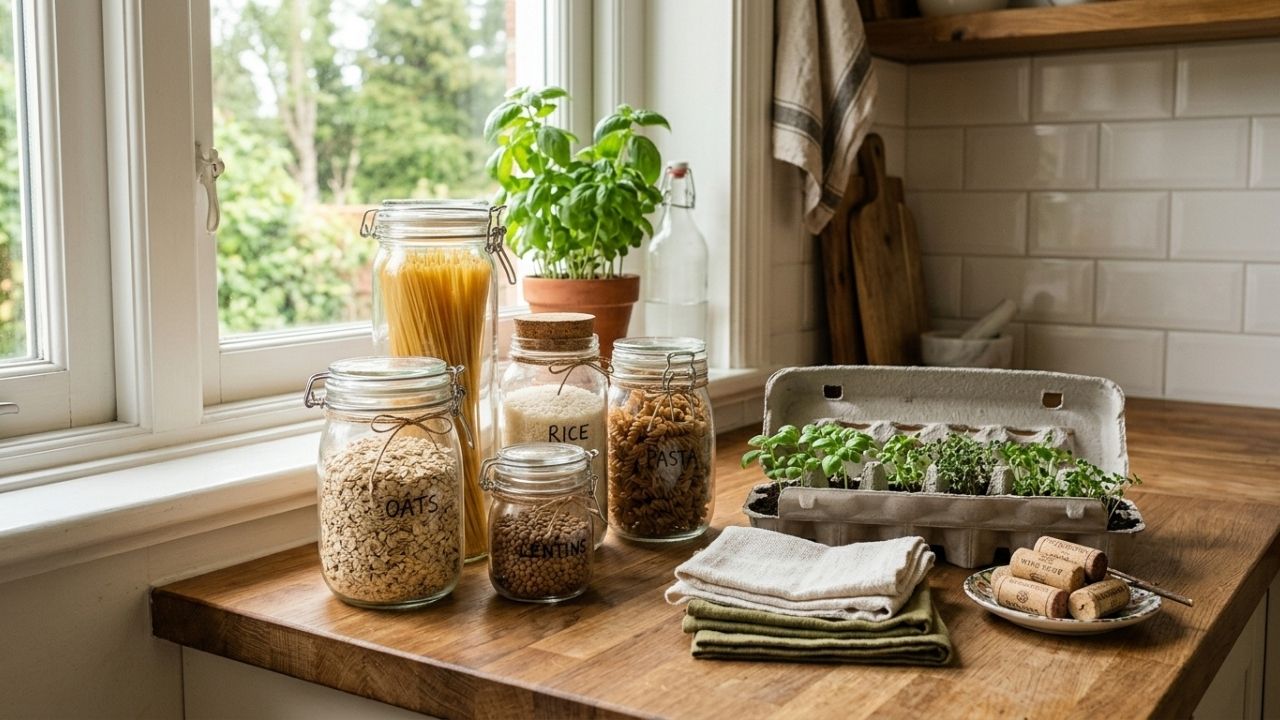
Glass jars make excellent containers for storing dry goods like rice, oats, flour, beans, spices, and pasta. Because glass does not absorb odors or stains the way plastic can, it keeps pantry staples fresher for longer. Labeling the jars with a piece of tape or a chalk marker makes it easy to keep track of what is inside.
Beyond the Pantry
Jars are not limited to food storage. They can also become:
- Drinking glasses for water, smoothies, or iced coffee
- Small vases for fresh flowers or herbs
- Containers for homemade salad dressings or sauces
- Bathroom organizers for cotton balls, hair ties, or bobby pins
- Candle holders once cleaned and dried
Bottles with narrow necks, such as old olive oil or vinegar bottles, work well for storing homemade infused oils, syrups, or even DIY cleaning solutions.
Plastic Containers and Tubs
While glass is often the preferred material for sustainability, plastic containers that already exist in the home should still be used before being replaced. Items like yogurt tubs, butter containers, and takeout boxes can serve many purposes before they are finally recycled or retired.
Some practical uses include:
- Freezing leftovers or homemade soups and stews
- Storing small hardware items like screws, nails, or rubber bands
- Organizing craft supplies or children’s art materials
- Starting seedlings for a garden, since the containers can be poked with drainage holes
- Packing school or work lunches to avoid single use bags
It is worth noting that plastic containers should be checked periodically for cracks or warping, especially if they are reused for food storage, since damaged plastic can harbor bacteria or leach chemicals when heated.
Aluminum Foil and Trays
Aluminum foil often gets used once and thrown away, but if it is not heavily soiled or torn, it can usually be wiped clean and reused for another round of cooking or wrapping. Aluminum baking trays, especially the disposable kind used for holiday meals or takeout, can also be reused multiple times before they lose their shape.
Aluminum trays are great for:
- Baking small batches of cookies or muffins
- Organizing items in a freezer
- Serving as a drip tray under plant pots
- Storing paint or craft materials during a project
Egg Cartons
Egg cartons, whether made of cardboard or plastic, have a surprising number of second uses. Cardboard cartons in particular are biodegradable, but before they are composted or recycled, they can serve a purpose around the home.
Common uses for egg cartons include:
- Starting seeds for a garden, since each individual cup is the perfect size for a seedling
- Organizing small items like buttons, beads, screws, or jewelry
- Creating a natural fire starter by filling each cup with dryer lint or wood shavings and topping it with melted wax
- Sorting and storing loose change
Wine Corks
For households that enjoy the occasional glass of wine, corks tend to accumulate over time. Rather than tossing them, corks can be transformed into useful or decorative items.
Ideas for reusing wine corks include:
- Creating a bulletin board by gluing corks together in a frame
- Using them as small plant markers in a garden
- Making coasters by arranging several corks side by side
- Using sliced corks as drawer or cabinet bumpers to reduce noise
Bread Bags and Produce Bags
Plastic bread bags and the thin bags used for produce at the grocery store are often discarded after a single use, but they can be reused many times over before they need to be recycled.
These bags work well for:
- Wrapping sandwiches or snacks for lunches
- Lining small trash bins in the kitchen or bathroom
- Storing produce in the refrigerator to keep it fresh longer
- Picking up after pets during walks
Worn Out Kitchen Towels and Cloths
Kitchen towels and dish cloths eventually become too worn or stained for regular use, but that does not mean they belong in the trash. Cotton and other natural fiber towels can be cut down and repurposed as:
- Cleaning rags for dusting or wiping surfaces
- Polishing cloths for shoes, silverware, or furniture
- Padding for packing fragile items when moving or shipping
- Garden ties for supporting young plants
Old Cutting Boards
When a cutting board becomes too scratched or worn for food preparation, it does not have to be thrown away immediately. Wooden cutting boards in particular can be sanded down and refinished with food safe oil to extend their life significantly.
If a cutting board is truly beyond repair for food use, it can still be repurposed as:
- A base for potted plants
- A serving tray for non food items like remote controls or mail
- A cutting surface for craft projects, such as trimming fabric or paper
Quick Reference Table
The table below summarizes some of the most common kitchen items and simple ways to give them a second life before disposal.
| Kitchen Item | Reuse Idea |
|---|---|
| Glass jars | Pantry storage, drinking glasses, vases |
| Plastic tubs | Freezer storage, organizing small items |
| Aluminum foil | Rewrap food, line baking trays |
| Egg cartons | Seed starters, organizing small parts |
| Wine corks | Coasters, plant markers |
| Bread bags | Lunch wraps, bin liners |
| Old towels | Cleaning rags, garden ties |
| Cutting boards | Refinish or repurpose as trays |
Tips for Building a Reuse Habit in the Kitchen
Developing a habit of reusing kitchen products takes a bit of intention at first, but it becomes automatic over time. A few strategies can help make the transition easier.
Create a Dedicated Storage Spot
Setting aside a drawer, shelf, or bin specifically for items that might be reused, such as jars, containers, or bags, makes it easier to remember they exist rather than tossing them out of habit. Once the collection grows, it becomes a resource to pull from whenever a container or storage solution is needed.
Wash Items Right Away
Rinsing out jars, containers, and bags as soon as they are empty prevents lingering odors or residue, which makes them far more pleasant to reuse later. A quick rinse takes only a few seconds and saves a lot of scrubbing down the line.
Know When to Let Go
Reusing items is a great habit, but it is also important to recognize when something has truly reached the end of its usefulness. Cracked containers, moldy sponges, or rusted metal should be recycled or disposed of properly rather than kept indefinitely. The goal is thoughtful reuse, not clutter.
Involve the Whole Household
Getting family members on board, including children, helps the habit stick. Turning jar washing or sorting into a quick shared task, or letting kids decorate reused containers for their own storage, makes the process feel less like a chore and more like a creative project.
Final Thoughts
The kitchen offers endless opportunities to reduce waste simply by looking at everyday items differently. Jars become storage containers, egg cartons become garden tools, and old towels become cleaning rags. None of these swaps require special skills or a big investment of time, just a willingness to pause before throwing something away.
Building this habit does not mean turning the kitchen into a cluttered collection of saved containers. It means being intentional about what gets a second life and what truly needs to be recycled or discarded. Over time, these small choices add up, leading to less waste, more savings, and a kitchen that reflects a genuinely sustainable lifestyle.