
Plastic has become such a normal part of everyday life that most people barely notice how much of it surrounds them. From the moment someone brushes their teeth in the morning to the last snack wrapper they toss before bed, plastic touches nearly every part of a typical day.
For anyone trying to live a more sustainable lifestyle, understanding exactly which household products generate the most plastic waste is the first step toward making smarter choices.
This article breaks down the biggest plastic culprits found in homes, explains why they are so problematic, and offers practical swaps that make a real difference without requiring a complete lifestyle overhaul.
Why Household Plastic Waste Matters
Plastic waste is not just an eyesore in landfills. Most plastics take hundreds of years to break down, and even then they do not fully disappear. Instead, they fragment into microplastics that end up in soil, rivers, oceans, and even the food people eat. Households are responsible for a significant share of this waste because so many everyday products are packaged in, or made from, single use plastic.
Recycling helps, but it is not a complete solution. Many types of plastic are not accepted by local recycling programs, and even those that are often end up in landfills due to contamination or lack of processing capacity. This is why reducing plastic at the source, meaning the products brought into the home in the first place, is such an important strategy.
The Biggest Plastic Waste Offenders in the Home
Some categories of household products contribute far more plastic waste than others. Below is a closer look at the worst offenders, organized by area of the home.
Kitchen and Food Storage
The kitchen is often the biggest source of plastic waste in a household. Food packaging alone accounts for a massive share of the plastic that enters homes every week.
- Plastic grocery bags and produce bags
- Cling wrap and plastic sandwich bags
- Single use water bottles and beverage containers
- Yogurt cups, cheese wrappers, and pre-packaged snack containers
- Plastic cutlery and disposable plates from takeout meals
- Plastic clamshell containers for berries, salads, and baked goods
Food packaging is particularly tricky because much of it is designed for convenience and freshness, making it hard to avoid entirely. However, this category also offers some of the easiest opportunities for change, since many alternatives already exist on store shelves.
Bathroom Products
The bathroom is another major contributor, often overlooked because the items are small and used daily without much thought.
- Shampoo, conditioner, and body wash bottles
- Plastic toothbrushes
- Toothpaste tubes
- Disposable razors
- Cotton swabs with plastic stems
- Plastic packaging around soap bars, wipes, and cosmetics
Because these products are replaced frequently, the plastic waste adds up quickly over a year. A single household might go through a dozen shampoo bottles, several toothbrushes, and countless razor cartridges annually.
Cleaning Supplies
Cleaning products are another hidden source of plastic accumulation. Most cleaning solutions come in plastic spray bottles, jugs, or pouches.
- All purpose cleaner bottles
- Dish soap containers
- Laundry detergent jugs and pods in plastic packaging
- Plastic scrub brushes and sponges
- Disposable cleaning wipes in plastic containers
Many of these bottles are technically recyclable, but the sheer volume used in an average home means they still represent a heavy plastic footprint.
Personal Care and Cosmetics
Beyond basic bathroom items, personal care and cosmetic products contribute a surprising amount of plastic waste.
- Makeup packaging including compacts, tubes, and applicators
- Lotion and sunscreen bottles
- Plastic hairbrushes and combs
- Nail polish bottles and related plastic tools
These products often combine multiple types of plastic in a single item, such as a pump mechanism made of one plastic and a bottle made of another, which makes recycling even more difficult.
Children’s Products and Toys
Households with children tend to generate significantly more plastic waste due to the sheer number of plastic toys, feeding supplies, and packaging involved.
- Plastic toys, many of which break quickly
- Sippy cups and baby bottles
- Disposable diapers with plastic components
- Snack packaging designed for kids, often in individual portions
Because children outgrow toys and supplies quickly, this category can generate waste at a faster pace than almost any other part of the home.
A Quick Comparison of Plastic Waste by Category
The table below offers a simplified comparison of how different household categories typically contribute to plastic waste, based on frequency of use and difficulty of finding alternatives.
| Category | Frequency of Plastic Use | Ease of Finding Alternatives |
|---|---|---|
| Kitchen and Food Storage | Very High | Moderate |
| Bathroom Products | High | Easy |
| Cleaning Supplies | High | Moderate |
| Personal Care and Cosmetics | Moderate | Moderate |
| Children’s Products | High | Difficult |
This comparison shows that while some categories, like bathroom products, are relatively easy to adjust, others, like children’s products, require more creativity and patience.
Practical Swaps That Actually Reduce Plastic Waste
Cutting back on plastic does not mean giving up convenience entirely. Small, consistent swaps can make a noticeable difference over time.
In the Kitchen
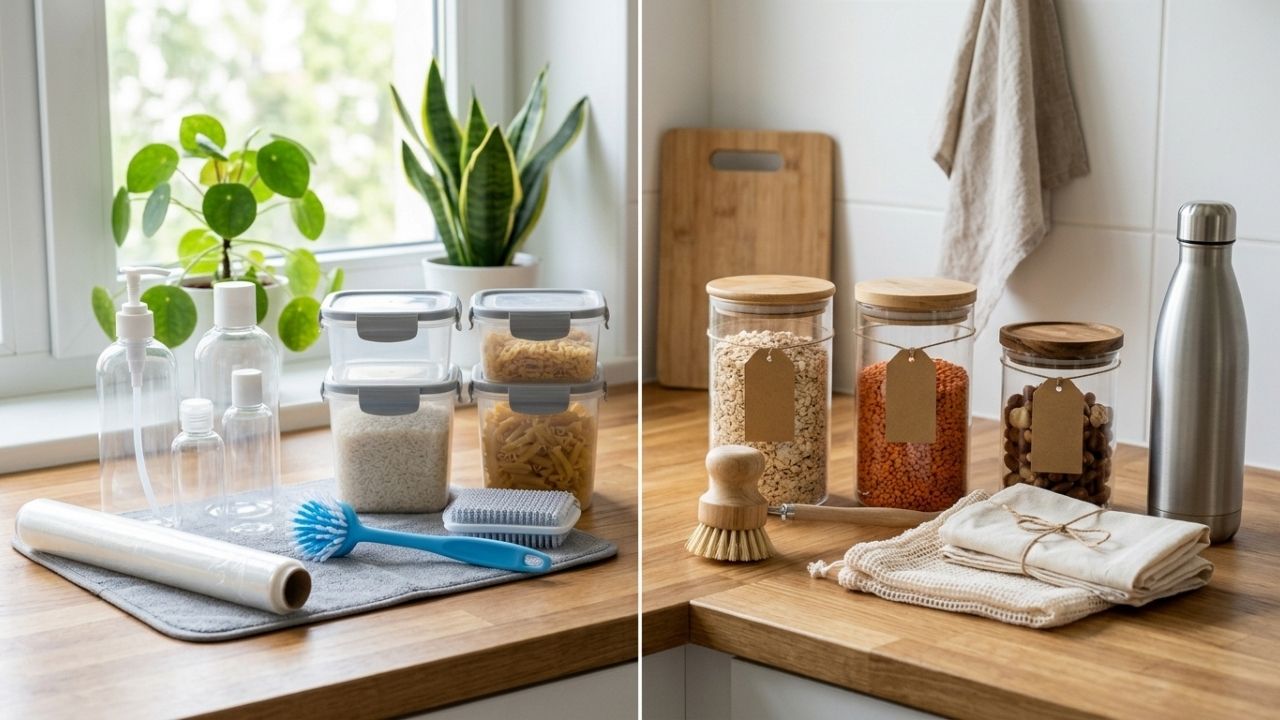
- Replace plastic wrap with beeswax wraps or reusable silicone lids
- Use glass or stainless steel containers for food storage instead of plastic tubs
- Bring reusable produce bags and shopping totes to the store
- Choose a reusable water bottle instead of buying bottled water
- Buy in bulk when possible to reduce packaging per item
In the Bathroom
- Switch to a bamboo toothbrush instead of a plastic one
- Try shampoo and conditioner bars instead of bottled versions
- Use a safety razor with replaceable blades instead of disposable plastic razors
- Choose bar soap over bottled body wash
- Look for toothpaste tablets or paste sold in glass jars
For Cleaning
- Buy concentrated cleaning products that come in smaller containers or refill pouches
- Make simple cleaning solutions at home using vinegar, baking soda, and water
- Replace plastic sponges with compostable alternatives like loofahs or cellulose sponges
- Choose laundry detergent sheets or powder in cardboard boxes instead of plastic jugs
For Personal Care
- Look for makeup brands that use refillable packaging
- Choose sunscreen and lotion in metal tins or glass bottles where available
- Use a wooden hairbrush instead of a plastic one
For Children’s Products
- Choose wooden or fabric toys instead of plastic ones when possible
- Buy secondhand toys to extend their life cycle rather than purchasing new plastic items
- Look into cloth diapers as an alternative to disposable ones
- Buy snacks in bulk and portion them into reusable containers instead of individually wrapped packages
Building Habits That Stick
Reducing household plastic waste is rarely about making one dramatic change. It tends to work better as a gradual process, where old products are replaced with better alternatives as they run out or wear down. Trying to replace everything at once can feel overwhelming and often leads to waste itself, since perfectly usable plastic items get thrown away prematurely.
A more sustainable approach involves a few simple habits.
- Use up existing plastic products fully before replacing them
- Research alternatives ahead of time so the switch feels natural when the moment comes
- Focus on the highest impact categories first, such as kitchen and bathroom items
- Involve the whole household so habits are shared rather than carried by one person
- Track progress loosely, noticing which swaps feel easy to maintain and which ones need adjustment
The Bigger Picture
While individual choices matter, it is worth remembering that household plastic waste is part of a much larger system involving manufacturing, packaging design, and waste management infrastructure. Supporting brands that use minimal or recyclable packaging, advocating for better local recycling programs, and staying informed about plastic alternatives all play a role in shifting the broader culture around plastic use.
Every bottle avoided, every reusable bag chosen, and every plastic toy replaced with a wooden one sends a small signal that adds up when repeated across many households. None of these changes need to be perfect to matter. Progress, even slow and imperfect progress, still reduces the amount of plastic waste flowing into landfills and oceans.
Final Thoughts
Household plastic waste comes from nearly every corner of daily life, but kitchens, bathrooms, cleaning supplies, personal care products, and children’s items tend to be the biggest contributors. Understanding where plastic waste actually comes from makes it much easier to target the changes that will have the greatest impact.
By making thoughtful swaps over time and building habits that fit naturally into everyday routines, it becomes possible to significantly cut down on the plastic waste a household produces. The goal is not perfection but steady, meaningful progress toward a more sustainable way of living.



